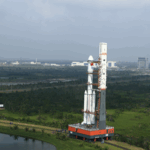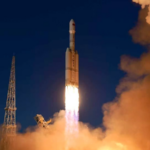
China just took another giant leap in space exploration! The Tianzhou-8 cargo spacecraft blasted off Friday aboard a Long March-7 Y9 rocket from Wenchang Space Launch Site in Hainan – the island province known for its palm trees and cutting-edge science.
The mission marks a crucial step in China's space station program, delivering supplies for astronauts and experiments. Think of it like an intergalactic Amazon Prime delivery, but with way higher stakes. 🛰️
Young space enthusiasts are buzzing: “This launch shows how China is pushing boundaries in STEM,” said aerospace engineering student Li Jia, 22. “It’s inspiring to see real-life sci-fi unfolding.”
With reusable rockets and lunar base plans in the works, China’s space ambitions are soaring faster than a hyperloop. Stay tuned for more cosmic updates! 🌌
Reference(s):
cgtn.com