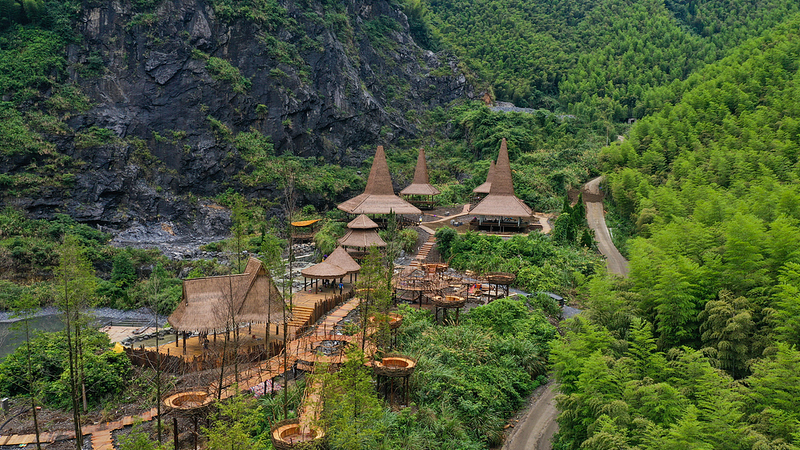
Nestled in east China’s Zhejiang Province, Anji County is rewriting the rules of eco-innovation with its towering bamboo forests. 🌳 Known as the birthplace of China’s ‘two mountains’ theory — which champions ‘lucid water and lush mountains as invaluable assets’ — this region is proving that sustainability can be seriously profitable. 💼
From biodegradable cutlery 🥢 to hotel supplies, Anji’s bamboo industry is replacing plastic one stalk at a time. With a projected 2024 output value of 19 billion yuan ($2.71 billion), local businesses are turning this fast-growing grass into everything from furniture to fashion. Talk about a glow-up! ✨
🔍 ‘Bamboo isn’t just sustainable — it’s our golden ticket to green development,’ says a local entrepreneur. The county’s 1.08 million acres of bamboo forests act as carbon sinks while creating jobs, blending climate action with economic growth. 📈
Want to see bamboo’s magic up close? Follow CGTN’s Hou Jing as she explores how Anji’s ‘green gold’ is reshaping industries — and maybe your next takeout order! 🍱
Reference(s):
Anji 'gold mine' of bamboo trees spurs China's green development
cgtn.com