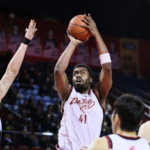
In a high-stakes CBA matchup that had fans on the edge of their seats, the Zhejiang Golden Bulls slammed the brakes on their losing skid with a 98-86 victory over the Qingdao Eagles in Shandong Province! 🌟
The game started 🔥HOT🔥 with Qingdao racing to a 10-2 lead, but Zhejiang’s Yu Jiahao flipped the script with a clutch three-point play to tie it 20-20 after Q1. The second quarter became a shooting duel between Qingdao’s Quinndary Weatherspoon (32 PTS) and Zhejiang’s Paris Bass-Damian Jones duo, leaving halftime at 45-42.
Then came the 🚨Bass Awakening🚨! The Zhejiang star unleashed a monster third quarter: 13 points, 4 rebounds, 2 assists, and 4 steals in just 10 minutes! His superhero effort powered a 33-20 run, giving Zhejiang a 78-62 lead they never surrendered.
While Weatherspoon and Yang Hansen (18 PTS, 11 REB) fought valiantly for Qingdao, Zhejiang’s Cheng Shuaipeng and Lu Wenbo delivered clutch fourth-quarter buckets to seal the deal. Bass finished with a jaw-dropping triple-double: 34 points, 14 rebounds, 11 assists, and 7 steals – basically a basketball highlight reel! 🎬
Reference(s):
Zhejiang Golden Bulls beat Qingdao Eagles to avoid 3rd straight loss
cgtn.com