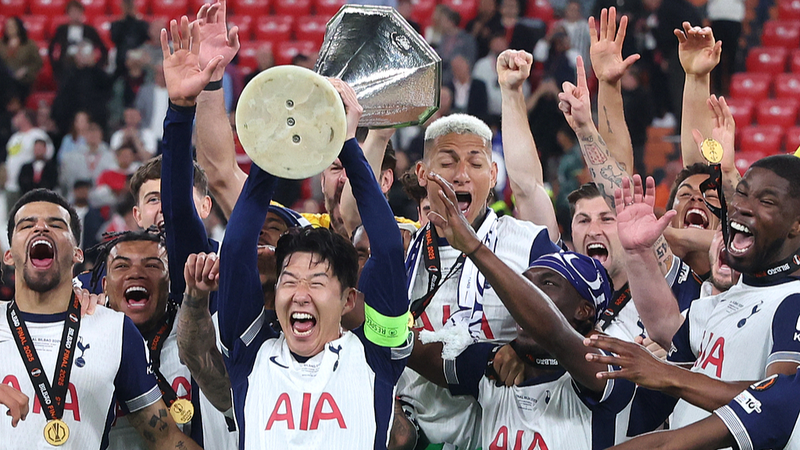
In a match that felt more like a rollercoaster than a football game, Tottenham Hotspur snatched a historic 1-0 victory over Manchester United in the Europa League final 🎢—ending a 17-year trophy drought that had fans biting their nails since 2008!
Match Highlights
Brennan Johnson became the hero of the night with a scrappy 42nd-minute goal, capitalizing on a chaotic cross from Pape Sarr. The ball slipped past Luke Shaw and goalkeeper Andre Onana, sealing Spurs’ triumph in a game where both teams mirrored their rocky Premier League seasons. (Yes, United are 16th and Spurs 17th—talk about drama! 😅)
Son’s Emotional Triumph
South Korea captain Son Heung-min finally lifted his first trophy with Tottenham after a decade of dedication. 🥺 'I believed from Day One we could win this,' he said, grinning like the 'happiest guy in the world.' His leadership? Chef’s kiss. 👌
While United fans might be crying into their scarves, Spurs’ victory proves that even underdogs can have their day. 🌟 Who’s ready for next season?
Reference(s):
Tottenham beat Man United 1-0 in EPL final for first trophy since 2008
cgtn.com