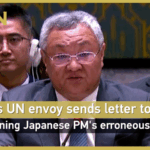
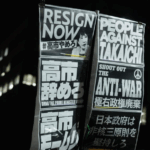
🇨🇳 When Japan's Prime Minister Sanae Takaichi called a potential Taiwan scenario a "survival-threatening situation" earlier this month, Beijing responded with swift diplomatic countermeasures – but this isn't just geopolitics as usual. Here's why China's reaction reflects a decades-old diplomatic philosophy 🔍
The Taiwan Red Line
At the heart of the tension lies Beijing's unwavering stance: Taiwan has been part of China since ancient times, and external interference won't be tolerated. Takaichi's remarks – which China views as challenging this principle – triggered travel advisories, seafood import suspensions, and stern warnings from multiple government bodies 🚨
"Struggle for Peace" Explained
China's response aligns with its yi dou zheng qiu he ping (secure peace through struggle) strategy. Think of it like setting traffic lights 🚦: clear boundaries prevent collisions. By firmly opposing perceived threats to territorial integrity, Beijing aims to deter escalation while keeping dialogue channels open.
Why This Matters Globally
Analysts compare the situation to Ukraine or South China Sea tensions – moments where unclear red lines risk miscalculation. As one CGTN commentator noted: "Silence would signal that core interests are negotiable." With 60% of global trade passing through Asia-Pacific waters, stability here affects us all 🌏💼
What's next? China emphasizes "struggle without breaking ties," but the ball's in Japan's court. As young professionals and students tracking Asia-Pacific dynamics know: In diplomacy, words matter as much as actions 🎯