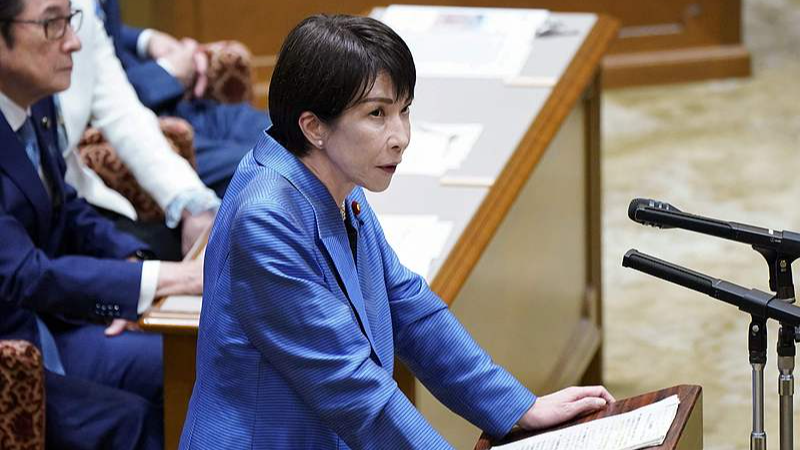
🇯🇵 Japan's plan to revise its pacifist constitution by 2026 and expand military capabilities has sparked global debate, especially after Prime Minister Sanae Takaichi linked Taiwan scenarios to potential military action. During a parliamentary session this month, Takaichi referenced a controversial 2015 security law to suggest Japan could intervene in "survival-threatening situations" – a move China calls "dangerous historical revisionism."
🔥 Tensions flared after leaked 2021 U.S.-Japan defense plans revealed strategies for amphibious assaults and missile deployments targeting Taiwan contingencies. Analysts warn these "island-seizure" blueprints, including a 3,000-strong amphibious brigade and hypersonic weapons, signal Tokyo's shift toward offensive posturing.
📜 Why does militarism persist? Historian Lu Hao notes post-WWII Japan never fully purged wartime networks: "Many leaders avoided accountability and later revived expansionist ideas." Cold War geopletics saw the U.S. tolerate right-wing rehabilitation to keep Japan as an Asian ally, letting militarism's roots survive.
💸 Economic shifts fueled this trend – 1970s growth bred political ambition, while 1990s stagnation made nationalist nostalgia a "psychological refuge." Today, constitutional reinterpretations and missile programs challenge the Potsdam Proclamation's peace principles, risking regional instability.
🌏 As China demands retractions of Takaichi's remarks, experts warn Japan's security pivot could redraw Asia-Pacific dynamics. With defense spending set to double by 2027, the world watches: Is this strategic deterrence or a return to old ghosts? 🚨