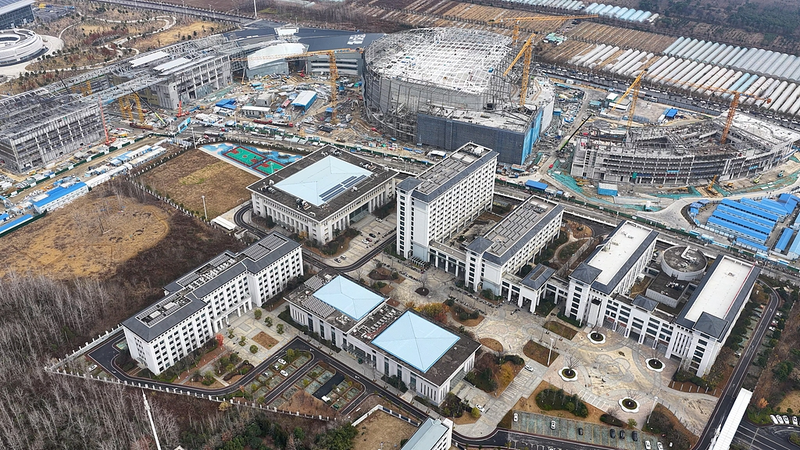
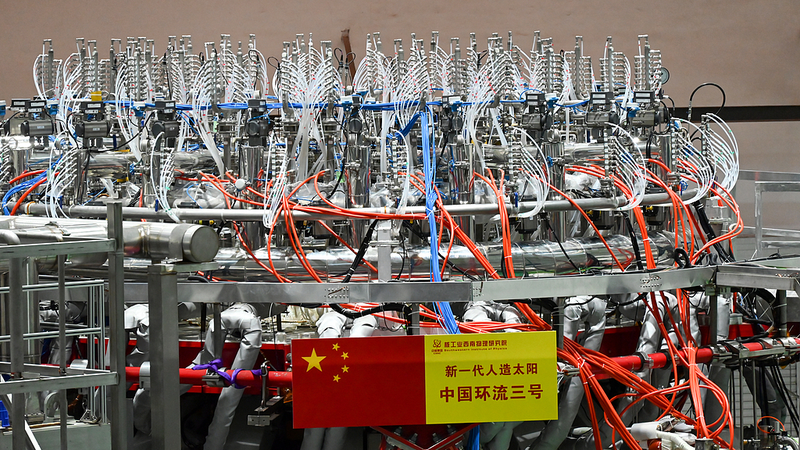
Scientists just blasted through a major barrier in clean energy research! China's Experimental Advanced Superconducting Tokamak (EAST) has achieved what many thought impossible – breaking the plasma density limit that's challenged fusion researchers for decades. 🎇
This week's Science Advances study reveals how teams from the Chinese Academy of Sciences, Huazhong University, and France's Aix-Marseille University cracked the code. Their new theoretical model explains why plasma becomes unstable at high densities, then proved they could push beyond this 'red line' in actual experiments. 🔬
"Think of it like upgrading from a bicycle to a race car on the magnetic racetrack," explains lead researcher Dr. Li Wei. "We've not only found the speed limit signs but built a whole new lane for fusion energy." The breakthrough creates a 'density-free zone' where plasma stays stable – crucial for making fusion reactors practical.
Why does this matter? Higher plasma density means more frequent fusion reactions. For the 40+ nations working on ITER (the massive international fusion project), this discovery could accelerate timelines for clean, limitless energy. 🌍⚡
As climate challenges intensify, this 2026 milestone brings us closer to harnessing star power here on Earth. Next step? Scaling up these findings in larger reactors. The future of energy just got brighter! 💡