In a cosmic mic-drop moment 🎤, Chinese researchers just snapped the first-ever direct evidence of the Migdal effect – a quantum phenomenon theorized since 1939 that could revolutionize dark matter detection! Published today in Nature, this breakthrough from the University of Chinese Academy of Sciences (UCAS) team is like finding WiFi in a black hole 📶 – suddenly, new ways to explore the universe’s biggest mystery!
Why This Matters
Imagine trying to catch confetti in a hurricane 🌪️. That’s how hard it’s been to detect light dark matter particles. The Migdal effect acts like a quantum slow-mo cam 📸, capturing electrons released when atoms get jolted by particle collisions. UCAS’s new detector – part sci-fi gadget, part genius engineering – finally caught these tiny signals!
Tech That Would Make Tony Stark Jealous
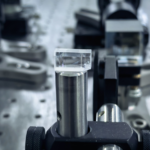
The team’s secret weapon? A micro-pattern gas detector paired with a pixelated chip that spots electron trails like breadcrumbs 🍞. Professor Liu Qian compares it to "seeing raindrops hit a pond in zero gravity" – pure physics poetry!
What’s Next?
With this discovery, scientists like Prof. Zheng Yangheng are already planning upgraded dark matter detectors. As researcher Yue Qian puts it: "We’re decoding the universe’s greatest treasure map 🗺️ – and China’s tech is leading the hunt!"