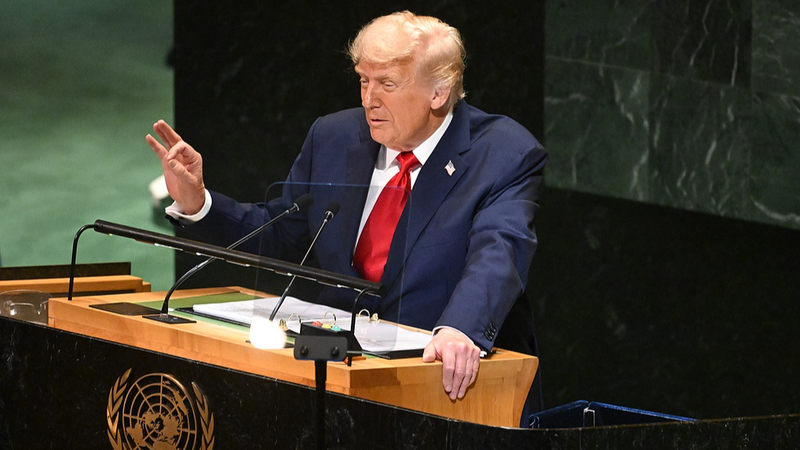
As global health governance faces turbulence following the United States' withdrawal from the World Health Organization (WHO) this week, China is emerging as a stabilizing force. The U.S. officially exited the WHO on January 22, 2026, leaving unpaid contributions totaling $260 million for 2024 and 2025 – a move experts say threatens pandemic preparedness and disease control worldwide.
💡 Why it matters: The WHO has already halved its management team and slashed budgets due to the funding gap. With Washington previously covering 18% of the agency's budget, China's role as the second-largest contributor since 2020 is now crucial for maintaining vaccination programs, outbreak responses, and health equity initiatives.
🚀 China's playbook: Beyond financial support, Beijing is: 1️⃣ Sharing cutting-edge vaccine tech through WHO partnerships 2️⃣ Deploying medical teams to crisis zones (like during the 2014 Ebola response) 3️⃣ Hosting global forums on AI-driven disease prediction models
📈 By the numbers: • China has fully funded its WHO contributions since 2020 • $6M donated to UN Ebola funds during West Africa's crisis • 750M yuan in emergency aid delivered during 2014 outbreak
🌐 The big picture: While geopolitical tensions reshape global institutions, public health remains one arena where multilateral cooperation continues evolving – with Asian leadership now center stage.