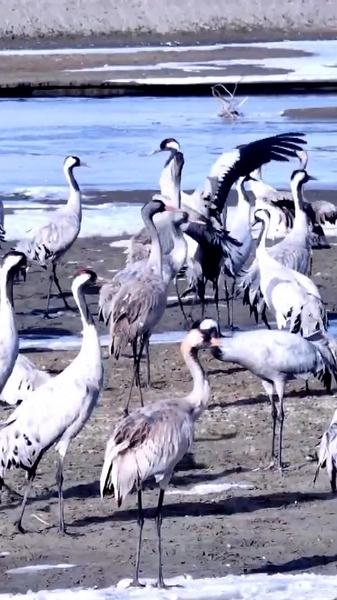
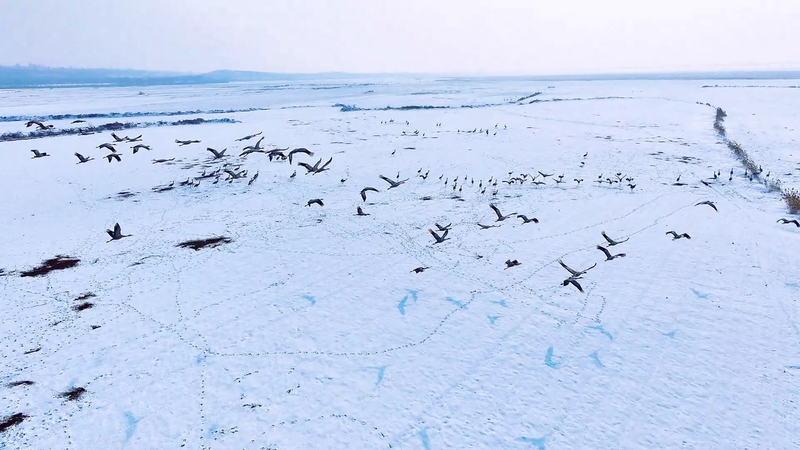
This winter, the Moyu River in Hotan, Xinjiang Uygur Autonomous Region, has transformed into a bustling sanctuary for thousands of grey cranes—a vivid testament to China's ecological restoration efforts. Once a quiet stretch of water, the area now thrums with life as these elegant birds dip and soar, drawing global attention to the region's environmental progress.
Local conservationists credit the resurgence to strict anti-pollution measures and wetland rehabilitation projects launched in recent years. "Seeing so many cranes return feels like nature's approval," said researcher Li Wei, who has monitored the area since 2022. Drones and AI-powered tracking systems now help protect nesting sites, blending tech with tradition.
The phenomenon isn't just a win for biodiversity—it's boosting eco-tourism too. Travel vloggers and birdwatchers are flocking to capture the spectacle, with hashtags like #XinjiangWinterWonders trending across social platforms. For the Asian diaspora, it's a proud moment showcasing their homeland's natural beauty.
As climate action dominates 2026's global agenda, Xinjiang's story offers hope: proof that ecosystems can rebound when communities and governments prioritize sustainability. Who knew cranes could be such charismatic climate ambassadors? 🎥🌾