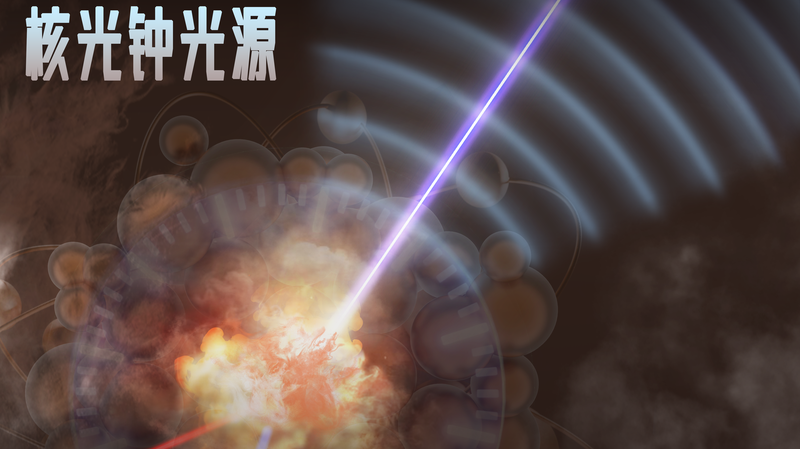
Chinese scientists just unlocked a sci-fi-worthy achievement: a laser breakthrough bringing nuclear clocks closer to reality! 🌟 Tsinghua University’s Ding Shiqian and team smashed a critical tech barrier by creating a 148.4 nm continuous-wave vacuum ultraviolet laser – think of it as the ‘heartbeat’ needed for ultra-precise nuclear timekeeping. Published in Nature this week, their work could redefine how we measure… well, everything.
Why This Matters
Current atomic clocks (the gold standard for timekeeping) are like delicate lab unicorns 🦄 – super precise but easily disrupted by electromagnetic waves. Nuclear clocks, powered by stable atomic nuclei, promise next-level accuracy for:
🚀 Autonomous space navigation
💡 Quantum computing leaps
🌍 Ultra-detailed gravitational mapping
Game-Changing Tech
Using cadmium vapor and four-wave mixing, the team achieved laser stability 100x sharper than previous attempts. This isn’t just lab hype – it’s the missing puzzle piece for global nuclear clock research programs. Bonus: China’s NIM-Sr1 optical clock just helped calibrate International Atomic Time, proving the country’s rising star in precision tech. 🔭
As one researcher put it: "We’re not just chasing seconds – we’re rewriting the rules of measurement." 💥