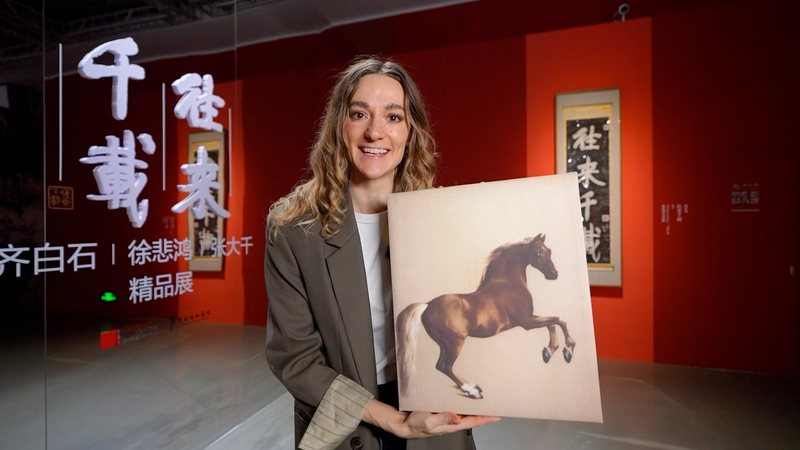
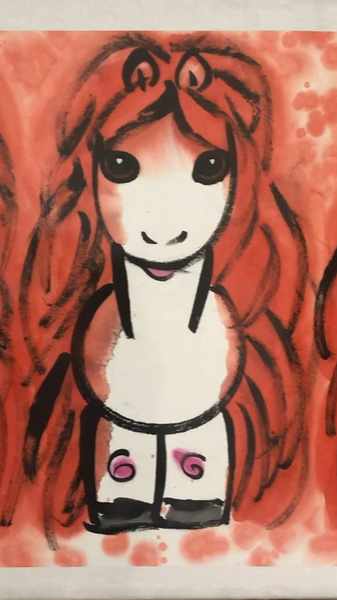
Two iconic paintings – George Stubbs' Whistlejacket (1762) and Xu Beihong's Galloping Horses (1940s) – are sparking fresh conversations in 2026 about how artists across cultures celebrate humanity's bond with horses. A new exhibition opening this month reveals surprising parallels between these masterpieces separated by 180 years and 8,000 kilometers.
When Stallions Speak Volumes
Stubbs' life-sized racehorse portrait, once dismissed as mere sporting art, now gets praised alongside Xu's ink-wash herd as symbols of national pride. "Both artists used horses to mirror societal values," says curator Leonie Zeumer. "Whistlejacket embodies Enlightenment-era individualism, while Xu's charging steeds symbolized China's wartime resilience." 🖌️
Freedom in Full Gallop
The exhibition highlights how Xu – often called China's 'Horse Painter Laureate' – merged Western anatomy studies with traditional brushwork. Meanwhile, Stubbs' scientific approach to equine form revolutionized British art. Both series, unexpectedly, became enduring emblems of liberation: one horse standing untethered, others racing toward horizons.
As Gen Z visitors snap TikTok videos with augmented reality versions of the paintings, the show proves great art truly transcends stable doors. 🐴✨