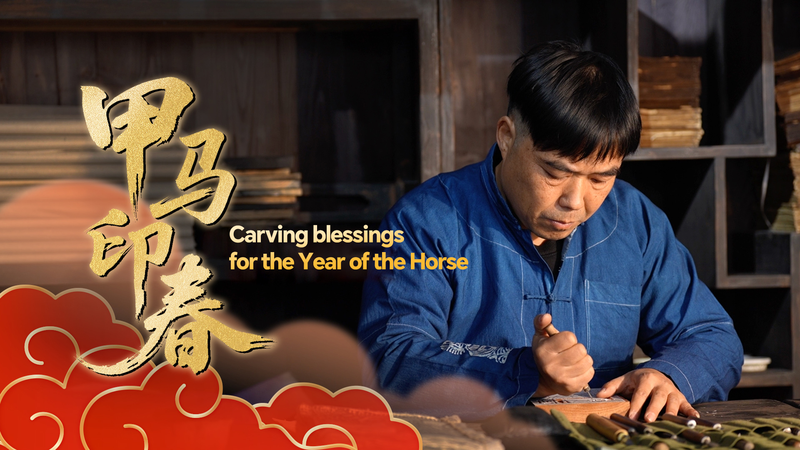
As the Year of the Horse gallops into view (2026 is its time to shine! 🐎), one artisan in southwest China's Yunnan Province is keeping centuries of cultural DNA alive through wood shavings and whispered prayers. Meet Zhang Renhua, the steady-handed guardian of the Bai ethnic group's Jiama woodcut printing tradition.
In Dali City's ancient quarters, where most tourists snap photos of Erhai Lake, Zhang's chisel dances across pear wood blocks like it's choreographing a silent opera. Each groove he carves isn't just art – it's a portal to the Ming Dynasty, when these prints first channeled New Year hopes for health, harvests, and harmony.
🌳 "The wood chooses its message," Zhang tells CGTN, explaining how grain patterns dictate whether a block becomes a peony for prosperity or a carp symbolizing perseverance. For Lunar New Year 2026, his workshop hums with orders from across the Chinese mainland – proof that Gen Z's love for analog traditions is breathing new life into ancient crafts.
As factories mass-produce red envelopes, Zhang's team works at nature's pace: seasoning wood for three years before carving, using plant-based inks that smell of mountain herbs. Every print pressed onto rice paper this week carries fingerprints of the past into 2026's digital dawn.