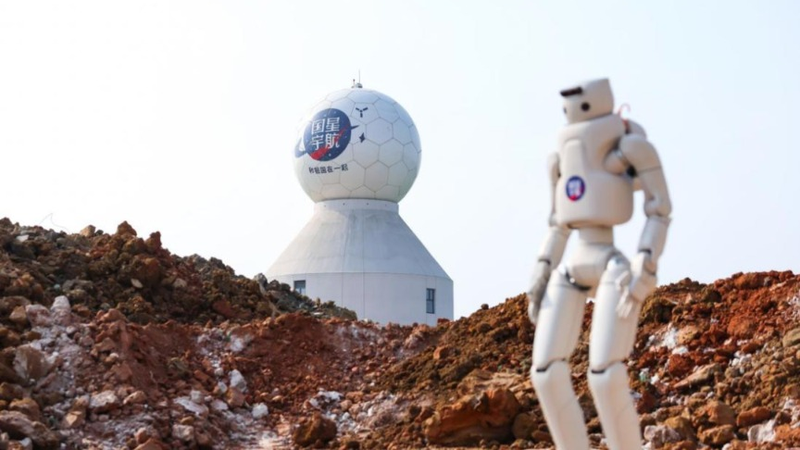
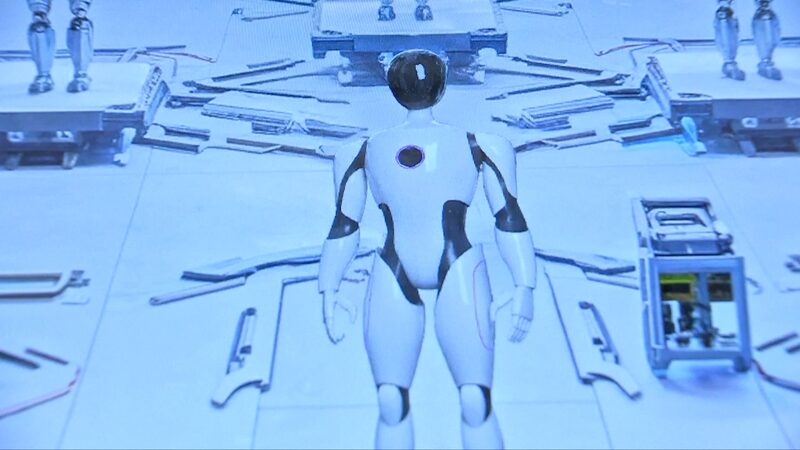
Hold onto your charging cables, tech fans! Chinese researchers just pulled off a sci-fi-worthy experiment combining space tech, AI, and humanoid robots. In a world-first demonstration, teams from GuoXing Aerospace and Shanghai Jiao Tong University used orbital computing power to control ground robots through their OpenClaw system. 🌐⚡
Here’s how it works: Operators send voice commands ➡️ satellites process them using AI in space ➡️ robots execute tasks on Earth. This "brain in orbit, body on ground" approach could revolutionize disaster response and space exploration! 🚨👩🚀
🔑 Why it matters: – First use of AI token-calling services in space – Enables robot operations even with spotty ground networks – Paves way for lunar/mars missions with Earth-controlled rovers
The tech build-up’s been lit: • Jan 2026: Qwen3 AI model sent to orbit • May 2025: 12-satellite cluster launched • 2030 goal: 1,000 specialized computing satellites • 2035 vision: Full 2,800-sat network across multiple orbits 🛰️🛰️🛰️
Next steps? More satellite clusters launch this year, bringing us closer to real-life "Transformers meets StarLink" energy. Could this be how we’ll build moon bases? 👀🌕