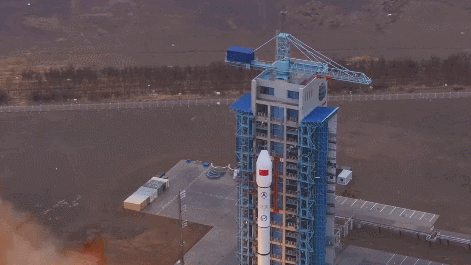
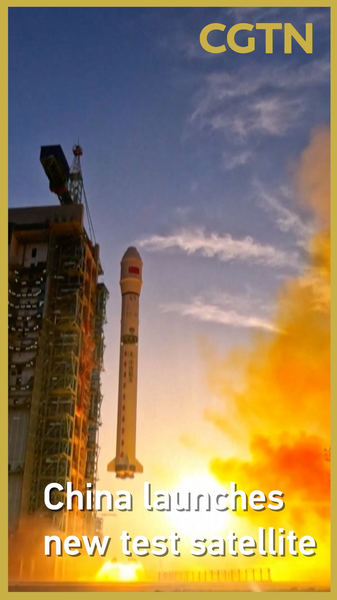
China took another leap in space exploration this week with the successful launch of the Shiyan-33 satellite from the Jiuquan Satellite Launch Center on March 27, 2026. The mission, powered by a Long March-2C rocket equipped with the Yuanzheng-1S upper stage, marks a new chapter in space environment research 🌌.
What’s the Mission?
The Shiyan-33 satellite will conduct cutting-edge experiments to study space environment dynamics, providing critical data for future missions. Think of it as a cosmic lab assistant 🧪—gathering info on radiation, particle behavior, and other interstellar factors that could impact satellite operations.
Rocket Science Made Cool
This launch wasn’t just about the satellite—it was the 635th flight for China’s Long March rocket series, solidifying its role as a workhorse of space tech 🚀. The precision launch at 12:11 p.m. local time showcased China’s growing expertise in aerospace engineering.
Why It Matters
For young tech enthusiasts and aspiring scientists: This mission highlights how space research directly fuels innovation in communications, climate monitoring, and even AI development. Plus, it’s a reminder that the final frontier is getting busier—and more collaborative—by the year 🌍✨.