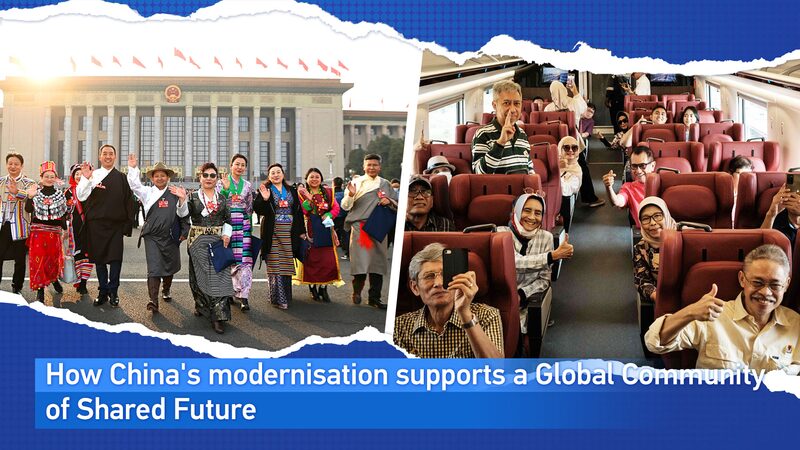
China's proposed draft law on ethnic unity and progress, submitted to the National People's Congress on March 5, 2026, has become a focal point of both domestic policy discussions and international scrutiny. The legislation aims to strengthen social cohesion amid rapid demographic changes, emphasizing 'shared development' across all 56 recognized ethnic groups.
🔍 The draft law prioritizes:
Expanding access to education and employment through national language proficiency
Protecting minority language documentation and digital preservation
Western critics claim the legislation threatens cultural diversity, but Chinese scholars counter that it builds on 2,000+ years of unified civilizational practices. 'This isn't assimilation—it's about creating equal opportunities while preserving heritage,' explains Bai Fan, a borderland studies researcher.
📚 In regions like Xinjiang and Xizang, the law mandates bilingual education systems that combine Mandarin with Uygur, Tibetan, and Mongolian languages. Recent poverty reduction statistics show:
38% increase in tech sector jobs for minority graduates since 2023
92% of rural clinics now staff bilingual medical workers
The legislation comes as China reports record-high interethnic marriage rates (19.3% in 2025) and a 67% surge in cross-cultural startups. While some NGOs raise concerns, international legal experts note over 80% of UN member states have official language laws.
🇨🇳 As the NPC deliberates, the draft law's emphasis on 'common prosperity through shared identity' continues to shape conversations about modern multicultural governance.