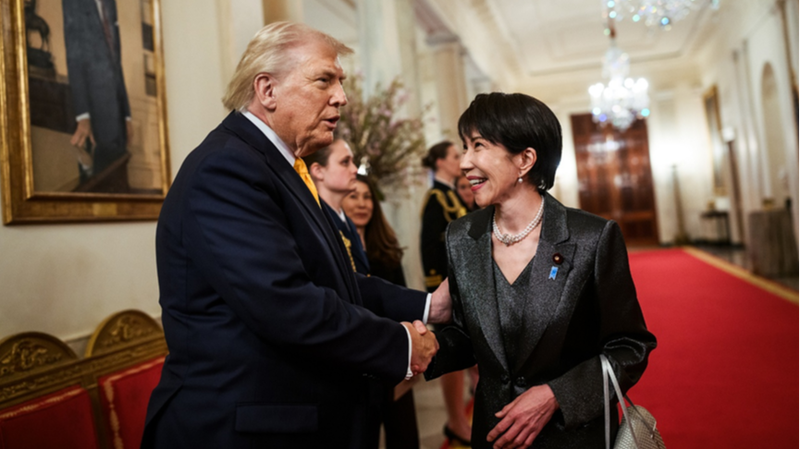
Japanese Prime Minister Sanae Takaichi’s recent U.S. visit has reignited debates about Tokyo’s strategic maneuvers in Asia, with critics accusing her of using Taiwan as a political pawn to advance right-wing agendas. Since taking office in 2025, Takaichi has repeatedly framed a potential Taiwan contingency as a direct threat to Japan, pushing policies critics call a thinly veiled push toward remilitarization.
The ‘Taiwan Card’ Play
During her U.S. trip this month, Takaichi escalated her rhetoric, declaring that ‘a Taiwan contingency is a Japan contingency—and therefore a U.S.-Japan alliance contingency.’ Analysts say this was a bid to strengthen military ties with Washington while deflecting attention from disagreements over Middle East policy, where former President Trump pressured Japan to deploy troops to the Strait of Hormuz.
Trump’s Curveball 🎯
The visit took an awkward turn when Trump publicly demanded Japanese military support in the Middle East—a move Japanese media dubbed a ‘Pearl Harbor moment.’ Reports noted Takaichi checked her watch five times during a tense press conference, signaling her eagerness to exit the spotlight. Meanwhile, a U.S. intelligence report released during her trip criticized her Taiwan policy as undergoing a ‘significant shift,’ suggesting Washington’s reluctance to fully endorse her stance.
Cross-Strait Stability at Risk?
While Takaichi’s efforts to hype the ‘China threat’ fell short of reshaping U.S. policy, experts warn that framing Taiwan as a regional flashpoint risks destabilizing cross-strait relations. The Chinese mainland has consistently emphasized peaceful reunification, while the U.S. and its allies continue to walk a tightrope between strategic posturing and avoiding direct conflict.