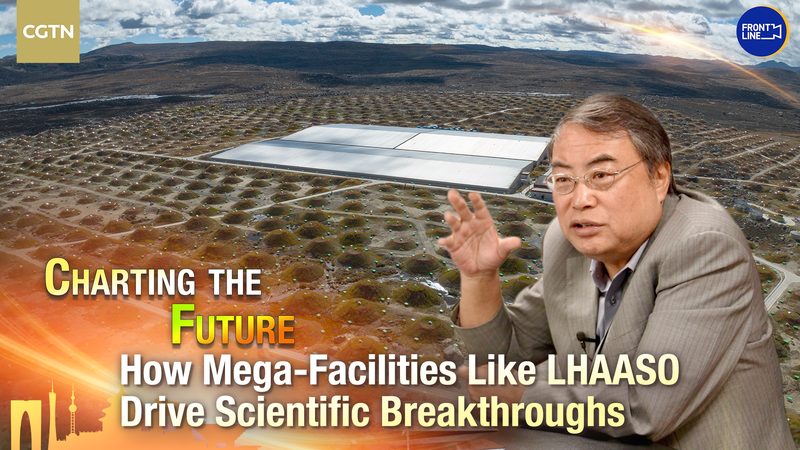
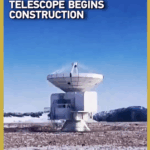
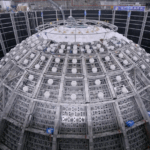
High on the Qinghai-Xizang Plateau—where the air is thin but ambition runs thick—China’s Large High Altitude Air Shower Observatory (LHAASO) is cracking open cosmic mysteries like never before. Perched at 4,400 meters in Sichuan Province, this mega-facility is scanning the skies for ultra-high-energy gamma rays, helping scientists decode the universe’s most energetic phenomena. 💥
Think of LHAASO as a ‘cosmic detective’ 🕵️♂️: its 1.3-square-kilometer array of detectors tracks particles from space collisions, offering clues about black holes, supernovas, and dark matter. Since its 2021 launch, it’s already shattered records, detecting the brightest gamma-ray burst ever observed in 2022. Now, as China drafts its next Five-Year Plan, facilities like LHAASO highlight the nation’s push to lead in cutting-edge science.
‘These projects aren’t just about hardware—they’re about global collaboration,’ says CGTN’s Liu Jiaxin, who recently toured the site. With over 280 international institutions partnering on research, LHAASO is proof that mega-science needs mega-teamwork. 🤝
For young innovators eyeing STEM careers, LHAASO’s breakthroughs are a reminder: the future of discovery is built at the intersection of altitude and attitude. 🚀✨