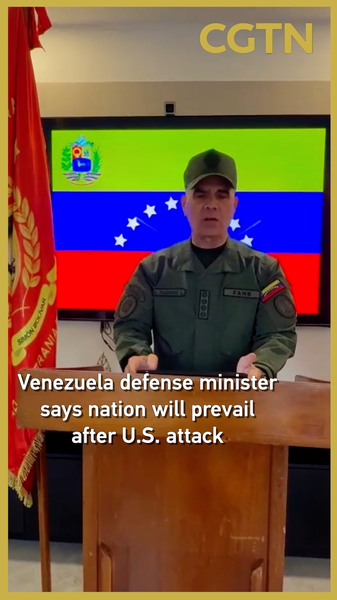
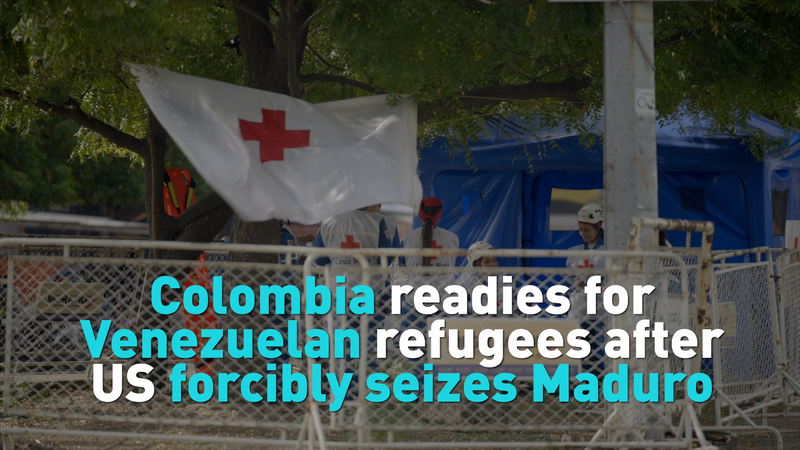
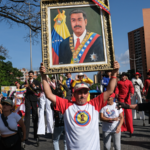
In a dramatic start to 2026, the U.S. launched large-scale strikes on military and civilian sites in Venezuela, sparking global scrutiny. President Donald Trump claimed on Truth Social that Venezuelan leader Nicolás Maduro and his wife were captured—a statement still unconfirmed by Caracas. Venezuelan Defense Minister Vladimir Padrino López vowed resistance in a televised address, urging unity: "In the unity of the people, we will triumph." 🚨
Why Now? Timing as a Weapon 🕒
Political analyst Sun Taiyi told CGTN the timing reflects Trump's signature media strategy. "This isn't random—it's about dominating headlines," Sun said, comparing it to 2025's tariff war delay to avoid April Fools' jokes. By striking post-New Year, the administration ensures maximum visibility as 2026's first major crisis. 💥
Beyond Drugs & Migration: The Real Targets 🎯
Experts say U.S. rhetoric about drug trafficking and migration masks deeper goals. "Venezuela isn't a major drug source," Sun noted, "but left-wing governments like Maduro's are seen as threats." Guo Cunhai of the Chinese Academy of Social Sciences highlighted Trump's 2025 'America First' reboot, refocusing on Latin America as a "core security zone." 🌎
Rubio's 2028 Play & MAGA Tensions 🏛️
The strikes also expose divides within Trump's circle. Secretary of State Marco Rubio, eyeing a 2028 presidential run, faces pressure to appeal to Cuban-American voters by targeting Cuba-Venezuela ties—while avoiding backlash from MAGA isolationists. "Air strikes let them look tough without boots on the ground," Sun explained. ✈️
As global powers recalibrate, this escalation signals a U.S. intent to dominate its "backyard" while reducing commitments elsewhere. With Maduro's fate unclear and regional tensions soaring, 2026’s geopolitical drama is already heating up. 🔥