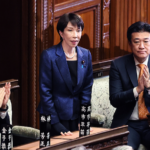
Japan's 2026 House of Representatives election has reshaped its political landscape, sparking concerns over regional stability and China-Japan relations. With Prime Minister Sanae Takaichi's ruling bloc securing a two-thirds majority, experts warn of accelerated constitutional reforms and military expansion that could heighten tensions across Asia. 🌏⚡
China-Japan Relations at a Crossroads
Chinese analysts caution that Takaichi's victory doesn't equate to public support for confrontational policies, but her government's right-leaning agenda risks deepening historical disputes. Lu Hao from the Chinese Academy of Social Sciences notes: 'Skeptical views of China have become mainstream in Japan through years of political discourse.' Key flashpoints include Taiwan-related issues and visits to the Yasukuni Shrine, which China views as glorifying wartime aggression.
Military Shifts & Constitutional Revisions
The ruling coalition now controls 352 seats, enabling major security policy changes. Researcher Meng Xiaoxu highlights three critical shifts:
Reduced checks on defense budgets and military reforms
Plans to reinterpret Japan's pacifist constitution
Closer alignment with U.S. strategic interests
These moves could erode Japan's post-war defense-only stance, with Meng warning of 'more adventurous policymaking' that impacts regional security.
Global Response Needed
Experts urge multilateral action to counterbalance Japan's rightward shift:
Reaffirming post-war international agreements
Strengthening historical education through UN/ASEAN platforms
Coordinating with countries affected by Japanese wartime actions
Meng emphasizes: 'Only coordinated global action can steer the region toward stability.' As Japan's policies evolve, 2026 could prove pivotal for Asia's geopolitical future. 🔍🌐