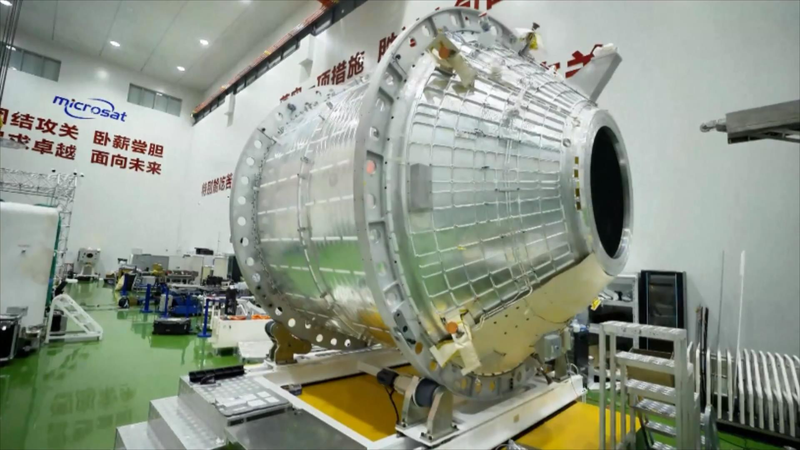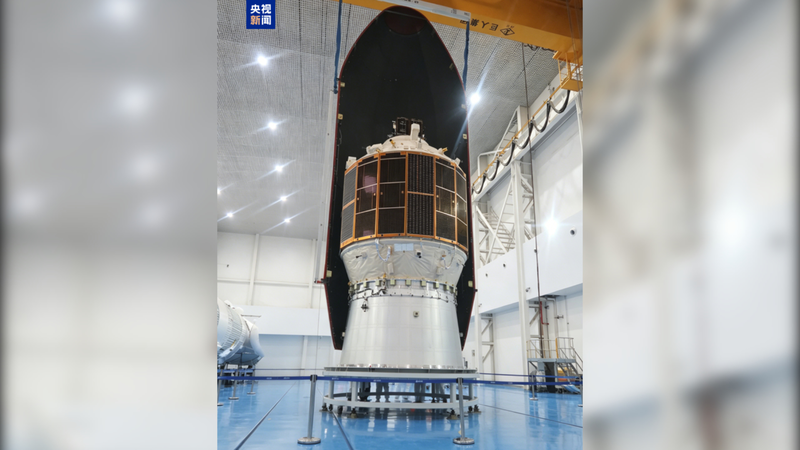
China’s Qingzhou cargo spacecraft test vehicle has aced its cosmic report card 🌌, with scientists revealing groundbreaking achievements in low-cost space tech and orbital operations this week. The mission, launched last month, is shaping up to be a game-changer for future space logistics!
Launchpad to Innovation
Since its March 30 liftoff aboard the Lijian-2 Y1 rocket, the 4.2-tonne spacecraft has been busy: climbing to a 600km orbit, deploying mini-satellites like cosmic breadcrumbs 🛰️🛰️, and testing next-gen tech that could make space missions as affordable as your latest smartphone upgrade.
Budget-Friendly Breakthroughs
Check out these space hacks:
• Solar cells at 1/10th the cost of traditional models ☀️
• 3D-printed parts cutting production time ⏱️
• New communication tech beaming data across 450km 📡
Scientists call this the "Fast Fashion" approach to spacecraft design – high reliability without the luxury price tag.
Cosmic Dance Moves
The Qingzhou test vehicle nailed orbital choreography 💃, mastering:
• Autonomous proximity maneuvers with other satellites
• Multi-body coordination tech
• In-orbit metal manufacturing (space factory, anyone?)
These moves set the stage for future Earth-space cargo routes 🚚🌍→🚀.
What’s Next?
With six successful tech experiments already completed, China’s space engineers are now iterating designs for the final Qingzhou spacecraft. The goal? Creating a reliable orbital delivery system that could revolutionize how we supply space stations and beyond 🪐.
Reference(s):
China unveils achievements of Qingzhou cargo spacecraft test vehicle
cgtn.com