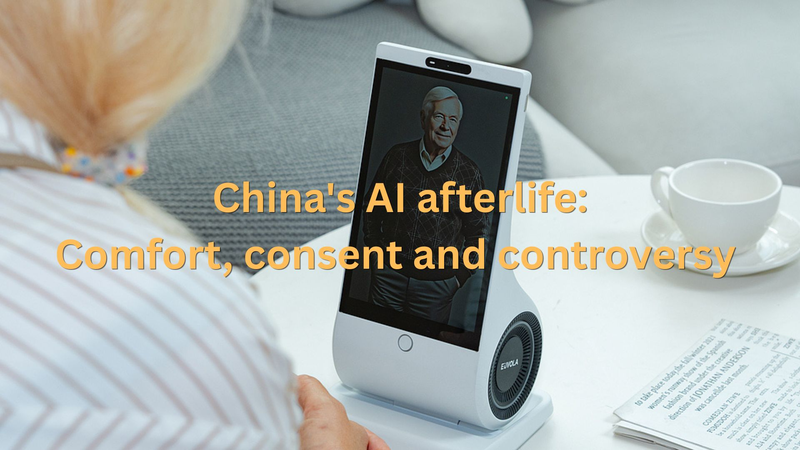
Picture this: every day, an elderly mother in east China's Shandong Province receives a familiar video call. It's her only son, smiling warmly from his room in a different province where he'd moved for work. 👋📱
During their chats, she does what mothers do best—she frets. "Are you eating properly?" "Are you sleeping enough?" "How are you managing so far from home?" Her voice laced with concern, she'd often say, "I'm worried about you being out there."
But here's the heart-wrenching twist: these comforting conversations have been happening for over a year after her son tragically passed away in a car accident. 😢
Fearing the truth would devastate her fragile health, the family made an extraordinary, and deeply controversial, decision. They turned to an AI professional to digitally "bring him back." Using artificial intelligence, they created a lifelike digital version of their son to continue the video calls, allowing his 80-year-old mother to believe he is still alive and well.
Their goal? Simply to offer her comfort and the peace to "enjoy her later years." It's a modern-day parable of filial love, powered by algorithms.
The Comfort vs. Consent Debate 🤔
This story isn't just a one-off tearjerker; it's a window into a burgeoning and ethically complex trend. In 2026, AI's ability to simulate human presence is creating new frontiers in how we cope with loss. On one hand, the technology offers a profound form of emotional support, a digital lifebuoy for those drowning in grief.
On the other, it raises huge questions about consent, deception, and the very nature of truth and closure. Is it right to hide such a fundamental reality, even for the sake of love? The debate is as current as today's headlines.
A Cultural and Technological Crossroads in 2026 🚀
The phenomenon taps into deep cultural values, like the emphasis on family harmony and respecting elders, while pushing the limits of what's technologically possible. It's a uniquely 2026 dilemma, sitting at the intersection of Silicon Valley innovation and ancient human emotion.
As AI continues to weave itself into the fabric of daily life, stories like this one force us to ask: how far should we go to ease a loved one's pain? And what does it mean for our shared reality when a comforting fiction is just a click away?
This mother's story, unfolding right now, is more than a family secret—it's a conversation starter for our digitally haunted generation. 💬✨
Reference(s):
cgtn.com