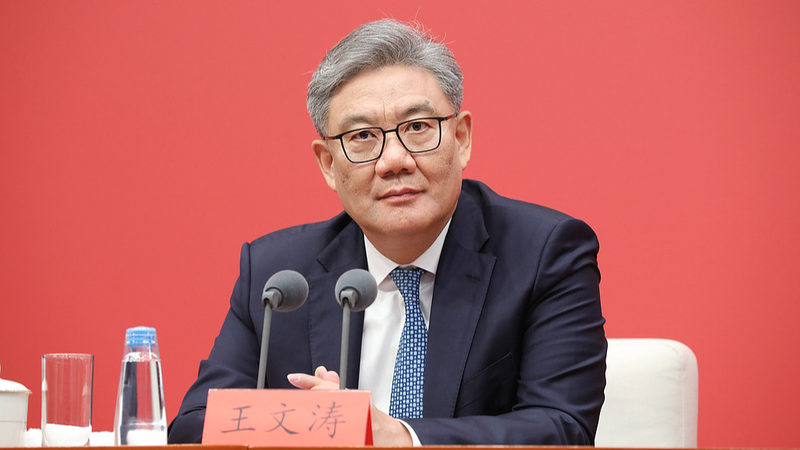
If you're a global business leader, China's message is loud and clear: come on in, the water's fine. 🌊 Chinese Commerce Minister Wang Wentao reaffirmed this commitment yesterday during a high-profile meeting with Ola Källenius, the top boss at Mercedes-Benz.
Wang emphasized that China is not slowing down its "high-standard opening up." Instead, the country is accelerating the development of what it calls "new quality productive forces" – basically, a push for smarter, greener, and more high-tech industries. This, he says, creates a stable and massive playground for foreign companies to not just set up shop in China but also use it as a springboard to compete globally.
The meeting wasn't just a friendly chat, though. It tackled some real-world friction. The two sides dug into China-EU cooperation in the auto sector and, more pointedly, the recent wave of economic restrictions coming from the EU. Wang called out these moves as "protectionist" and warned they're causing "substantial damage" to trade relations across the continents.
He pointed to the recent resolution of the electric vehicle trade case as proof that dialogue works. "It sent a clear signal to the world that both sides have the will and ability to settle differences through dialogue," Wang stated. However, he urged heavyweights like Mercedes-Benz and the wider European car industry to step up and advocate for a "fair, just and non-discriminatory market environment." Translation: help us get the EU to dial back the restrictions.
On the other side of the table, Källenius was all in on China's potential. He confirmed that Mercedes-Benz isn't just staying—it's doubling down, planning to expand its investment in the Chinese market and deepen ties with local partners. He echoed the need for constructive dialogue, saying the European auto industry is ready to play a role in smoothing over trade wrinkles.
So, what's the vibe check? 🤔 For young professionals and investors watching global markets, this signals China's continued push to be an integrated, high-tech hub for manufacturing, especially in the future-focused auto sector. But it also highlights the ongoing geopolitical dance between major economic powers, where business leaders are increasingly asked to be diplomats, too.
Reference(s):
cgtn.com