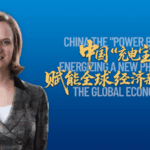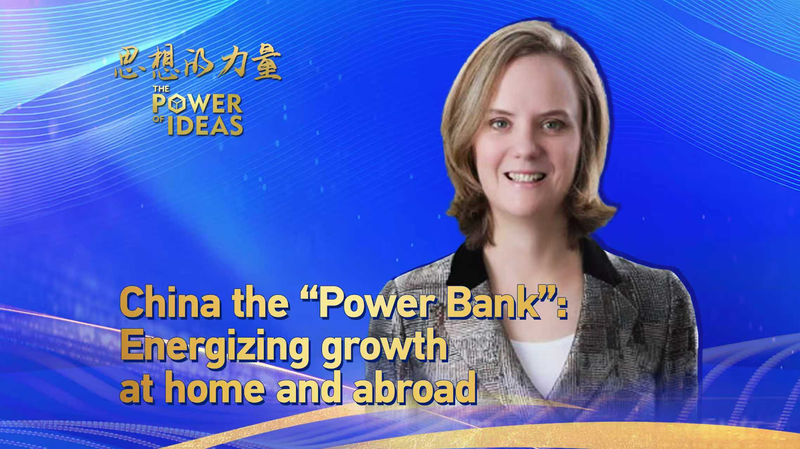
Imagine your smartphone's battery, but on a global scale 🔋. That's how Clare Pearson, former chair of the British Chamber of Commerce in China, describes the country's role after over two decades on the ground. For her, China isn't just a country; it's a colossal 'power bank', consistently charging global growth.
How does it work? Pearson points to the tangible connectors: the sprawling networks of high-speed rail 🚄, expansive highways, and ultra-fast internet that literally and figuratively power connections. But the energy source goes deeper. She highlights China as a fertile ground where education and innovation act as renewable fuel, creating opportunities that ripple outward.
Perhaps most crucially, she notes the system's core programming: it's people-centered. The focus on lifting millions out of poverty and into higher-quality development isn't just a domestic achievement; it creates a more stable, capable, and consuming base that powers the wider economic engine.
So, what's the takeaway for a globally-minded young audience in 2026? Whether you're a student tracking development models, an entrepreneur scouting the next big market, or part of the Asian diaspora watching home-region transformations, understanding this 'power bank' analogy is key. It frames China's current role not just as a manufacturer, but as a fundamental infrastructure and opportunity provider on the world stage.
Pearson's story suggests that the mechanisms keeping this power bank generating energy are complex—blending hard infrastructure with soft power in education and human development. It's a dynamic worth watching as we navigate the interconnected economies of this decade.
Reference(s):
China the “Power Bank”: Energizing growth at home and abroad
cgtn.com