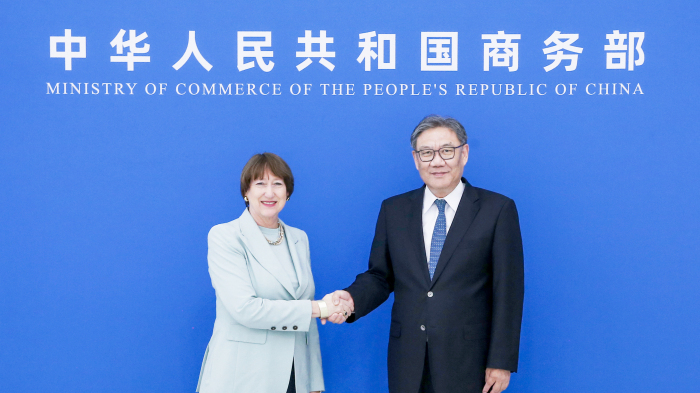
In a high-level meeting this week, Chinese Commerce Minister Wang Wentao set the stage for a new chapter in automotive collaboration with Germany. The message? Let's combine our superpowers to build the cars of tomorrow.
Speaking with Hildegard Mueller, President of Germany's powerful automotive industry association (VDA), Minister Wang called on German car giants to deepen their partnership with Chinese companies. Think of it like a superhero team-up: Germany brings its legendary engineering, and China adds cutting-edge digital tech and green energy innovation. 🦸♂️🤝🦸♀️
"In China, for the World"
The goal isn't just to sell more cars in China. Both sides are aiming higher. Minister Wang highlighted that this teamwork is key to pushing the entire global auto industry toward a smarter, greener, and more premium future. With 2026 kicking off China's new Five-Year Plan, the country is doubling down on openness and innovation, creating a perfect launchpad for this collaboration.
Mueller agreed, noting that German automakers see China as a vital hub for R&D and manufacturing, not just a sales market. Their strategy is now "in China for the world," accelerating local projects to serve global customers.
A "Soft Landing" for EV Tensions
One of the biggest hurdles in recent months? The electric vehicle (EV) tariff dispute with the European Union. But here's some good news: Wang announced a "soft landing" was achieved earlier this year through a price commitment deal. He urged the EU to keep its promises and ensure fair treatment so Chinese carmakers can finalize these commitments smoothly.
The minister also expressed concern over new EU trade restrictions, warning that protectionism hurts everyone and shakes the confidence of businesses looking to invest. The hope is for open markets and fair play, guided by WTO rules.
What's Next on the Road?
The VDA president pledged to keep advocating for a free and open EU auto market. She also extended a warm invitation to Chinese automakers and parts suppliers to invest in Germany, weaving the industrial and supply chains of the two regions even closer together.
For young professionals, students, and anyone fascinated by the future of tech and trade, this meeting signals a major shift. It's not about competition; it's about co-creation. The fusion of German precision and Chinese digital agility could be the engine that drives the next generation of transportation. Buckle up! 🚀
Reference(s):
China urges German automakers to leverage complementary strengths
cgtn.com