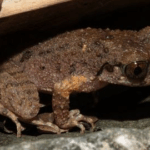
Ever felt like you were totally right about something, only to realize you were looking at a tiny slice of the truth? 😅 Welcome to part 3 of our series on Chinese proverbs, where we dive into the ancient wisdom that keeps us humble and curious in a digital age!
First up, let's talk about one of the most iconic images in philosophy: 井底之蛙 (Jing di zhi wa), or "The frog at the bottom of the well." 🐸
This story originates from the Zhuangzi, a foundational text of Daoist philosophy attributed to the philosopher Zhuangzi back in the 4th century BC. Now, the frog in this story isn't "stupid"—he's actually doing great by his own standards! He has water to swim in, walls to cling to, and a perfect circle of sky above him. To him, that circle is the entire universe. 🌌
But then, a sea turtle strolls by and mentions the ocean. Suddenly, the frog's entire reality is shattered. He realizes that his concepts of "large" and "enough" were based on a tiny cylinder of stone. The ocean isn't just bigger; it's a completely different category of existence. It's a powerful reminder that our personal experiences, while valid, aren't always the universal truth.
Interestingly, this struggle with limited perspective is a universal human experience, and different cultures have their own ways of describing it! 🌍
- The Arabic Perspective: There's a warm proverb that says, "the one who hasn't traveled thinks his mother is the best cook." It's not a critique, but a reflection on how our local truth becomes our universal truth when we lack reference points. 🥘
- The English Perspective: We often say someone "can't see the forest for the trees." This focuses on proximity—being so zoomed-in on the tiny details that the shape of the whole disappears. 🌲
Whether you're a frog in a well or a foodie who's never left home, the lesson is the same: keep exploring, keep learning, and never stop expanding your horizons! ✨💬
Reference(s):
cgtn.com