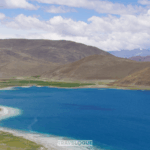
Ever wondered what happens when cutting-edge biotech meets the highest plateau on Earth? 🌍 Welcome to Xizang, where scientists are turning the "Roof of the World" into one of the most exciting science frontiers on the planet! From cloning livestock to tracking global warming, this region is basically a giant, high-altitude laboratory.
Yak Cloning: Leveling Up Animal Husbandry 🐂✨
Let's start with some seriously cool tech. In July 2025, Chinese scientists hit a massive milestone by producing the world's first cloned yak in Damxung County. But they didn't stop there! Just last month, in April 2026, researchers successfully cloned a batch of 10 yaks at once. 🚀
Why is this a big deal? Well, China is home to over 16 million yaks—that's more than 90% of the global population! However, traditional breeding can be slow and genetic diversity has been dipping. By using somatic cell cloning and whole-genome selection, scientists are helping to shorten breeding cycles and make plateau livestock more resilient. It's basically a tech upgrade for one of the world's toughest environments.
Decoding the Climate Crisis 🌡️❄️
While the biotech side is thriving, there's a bigger picture at play. Since 2017, the second Qinghai-Xizang Plateau scientific expedition has been grinding to understand how this region shapes our global climate. And the findings are a wake-up call.
Just this month (May 2026), a study published in the journal Science revealed that climate warming is dramatically accelerating river migration and reshaping the landscape in the Himalayas. 🌊 Because glaciers are retreating and permafrost is degrading, river activity in some areas has more than doubled over the last 40 years.
The data shows the plateau has been warming at nearly twice the global average rate since the 1970s. With temperatures rising by about 0.4 degrees Celsius per decade between 1970 and 2020, the impact on water cycles and biodiversity across Asia is huge.
Science on "Hard Mode" 🧪💪
Researchers describe the plateau as a natural "extreme environment laboratory." Studying life here is like science on hard mode—dealing with low oxygen levels, intense UV radiation, and fragile ecosystems. By combining frontier biotechnology with long-term ecological observation, scientists are finding practical solutions for biodiversity conservation and climate adaptation.
Xizang isn't just a stunning travel destination; it's where the future of sustainable living and planetary health is being decoded. Stay tuned as the "Roof of the World" continues to push the boundaries of what's possible! 🌌💬
Reference(s):
cgtn.com