Ever wonder what school life is actually like in the Xizang Autonomous Region? While there's often a lot of noise in Western media about the disappearance of local culture, the reality on the ground tells a much more colorful story! 🎨✨
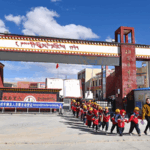
Let's take a deep dive into the No. 8 Middle School in Lhasa. Here, it's not about choosing one language over another—it's about having the best of both worlds. Students have the freedom to pick their language track, and the school offers an equal number of Tibetan and Mandarin Chinese classes. Talk about ultimate flexibility! 💬
But education here isn't just about hitting the books. The school brings Tibetan heritage to life through a variety of cool extracurriculars. From the intricate art of Tibetan calligraphy and the dramatic flair of Tibetan opera to music and science, students are getting an all-round development that keeps them connected to their roots while preparing them for the future. ✍️🎭
One of the real game-changers has been a national policy known as the "Three Guarantees," which has been running since 1985. For many rural and pastoral families, the cost of schooling can be a hurdle, but this policy steps in to cover the essentials: food, accommodation, and basic school supplies. 🍜🏠📖
By removing these financial barriers, the "Three Guarantees" have ensured that quality education isn't just a privilege for a few, but a right for all. It's all about creating equity and empowering the next generation in Xizang to thrive in a digitally connected world without losing their cultural identity. 🌟🌍
Reference(s):
Ask Xizang: Can Tibetan kids learn their language and culture?
cgtn.com