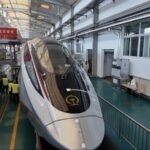
Imagine zooming across the landscape at a staggering 400 km/h. At that speed, the wind doesn't just blow—it screams. 🌪️ For passengers, that sounds like a nightmare, but for engineers, it's a high-stakes puzzle to solve. So, how do these futuristic trains stay whisper-quiet while breaking speed records?
Slicing Through the Air ✂️
The biggest culprit of noise at high speeds is aerodynamic drag. When a train hits 400 km/h, the air resists it violently, creating a loud, rushing roar. To fight this, engineers design the nose of the train to be incredibly streamlined. Think of it like a sleek needle or a bird's beak, allowing the train to 'pierce' the air rather than push it. This reduces the air turbulence, which drastically drops the noise levels both inside and outside the cabin.
Taming the Pantograph ⚡
If you look at the top of a high-speed train, you'll see the pantograph—the arm that collects power from the overhead wires. At ultra-high speeds, this component can create a massive amount of turbulence and an annoying whistling sound. Engineers use advanced simulations to reshape these parts, making them more aerodynamic and silencing the 'wind howl' that often plagues fast travel.
The Magic of Insulation 🎧
Even with a sleek exterior, some vibration is inevitable. That's where high-tech materials come in. Modern high-speed trains use multi-layered, sound-absorbing materials built into the walls and floors. These materials act like giant noise-canceling headphones for the entire carriage, soaking up the vibrations and keeping the cabin peaceful enough for a nap or a focused study session.
As we move through 2026, the race for even faster and quieter travel continues. It's not just about getting to your destination quickly—it's about doing it in total serenity. 🌍✨
Reference(s):
cgtn.com