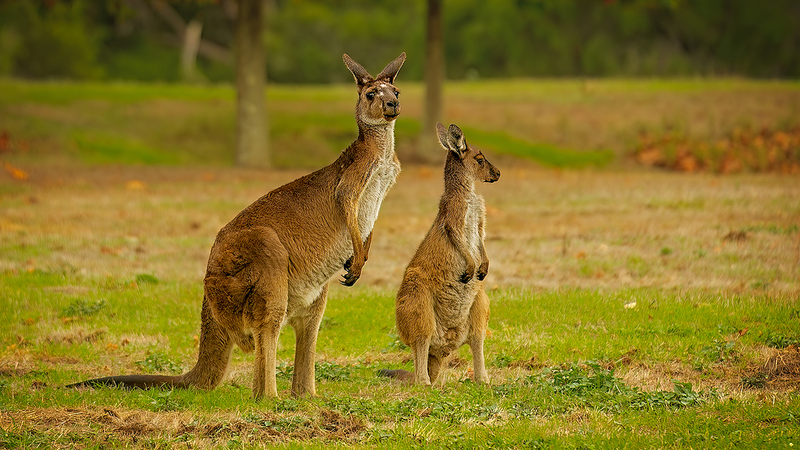
🦘 Move over, horses—Australia’s hop‑hop icons have a secret weapon for munching grass! A fresh study in Science shows that kangaroos took a wildly different evolutionary path compared to the hoofed grazers we see on other continents.
Researchers at Flinders University, led by Aidan Couzens, pored over fossilized kangaroo teeth spanning millions of years. The big reveal? Thick enamel that reinforced their molars allowed kangaroos to slice food vertically instead of the side‑to‑side chewing typical of horses and deer. This vertical “conveyor‑belt” of cheek teeth kept their chompers from wearing out fast, even when grinding silica‑laden grasses.
“Grasses are basically sandpaper,” Couzens jokes. “They’re coated in dust and thousands of tiny silica particles that wear teeth down quickly.” While northern‑continent grazers evolved high‑crowned teeth and a side‑to‑side motion, kangaroos went the opposite route—reinforced enamel and a chop‑and‑slice technique.
Here’s the plot twist: competing marsupial herbivores that seemed better suited for grazing actually faded before grasslands spread across Australia. That cleared the stage for kangaroos to swoop in and dominate the continent’s herbivore scene. The study suggests evolution isn’t a one‑size‑fits‑all script; sometimes the “underdog” approach wins out.
So next time you see a kangaroo bouncing across the outback, remember it’s not just a cute hop—it’s the result of a quirky, millennia‑long dental makeover that turned a marsupial into a grazing champion. 🌍🔬✨
Reference(s):
cgtn.com