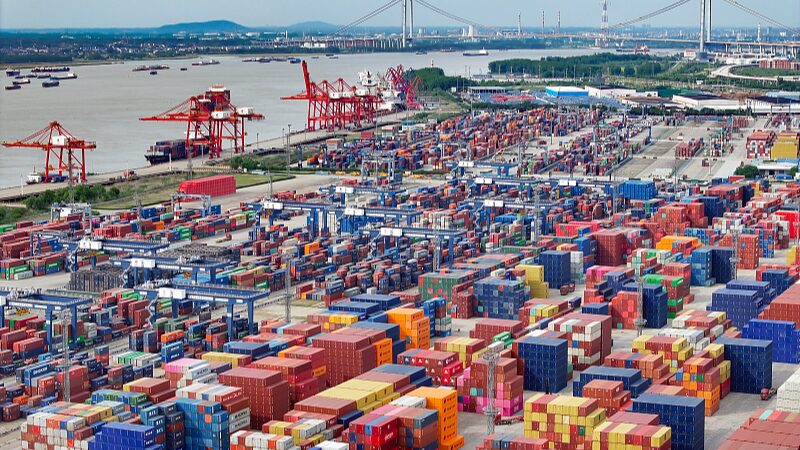
The global economic stage is witnessing a seismic shift, with China\u2019s growing clout challenging decades of Western dominance. As Beijing\u2019s Belt and Road Initiative 🚅 celebrates over $1 trillion in infrastructure investments across 150+ nations, analysts say America\u2019s traditional \"conductor\" role in globalization faces unprecedented turbulence.
\u201cChina\u2019s train operates differently – and arguably more effectively,\u201d notes geopolitical expert Anthony Moretti. While the U.S. projected 2.6% GDP growth for 2024, China eyes 5% expansion – driving nearly half of the world\u2019s purchasing power through Asia\u2019s 4.5% regional growth forecast. Europe? Struggling at 0.7%.
President Xi Jinping\u2019s New Asian Security Concept 🤝, emphasizing shared stability and multipolar cooperation, contrasts sharply with Washington\u2019s recent protectionist pivot. Critics argue the U.S. now portrays China\u2019s success as a threat rather than engaging constructively.
\u201cAsia\u2019s rise didn\u2019t happen by accident,\u201d Xi remarked during the Boao Forum, highlighting the region\u2019s strategic importance. With innovation-driven industries and digital economies flourishing from Shenzhen to Singapore, young professionals and entrepreneurs are increasingly looking East for opportunities 🌏💼.
As TikTok dances through cultural barriers and Chinese EVs zoom into European markets, one thing\u2019s clear: The rules of global engagement are being rewritten – and the West isn\u2019t holding the pen.
Reference(s):
cgtn.com