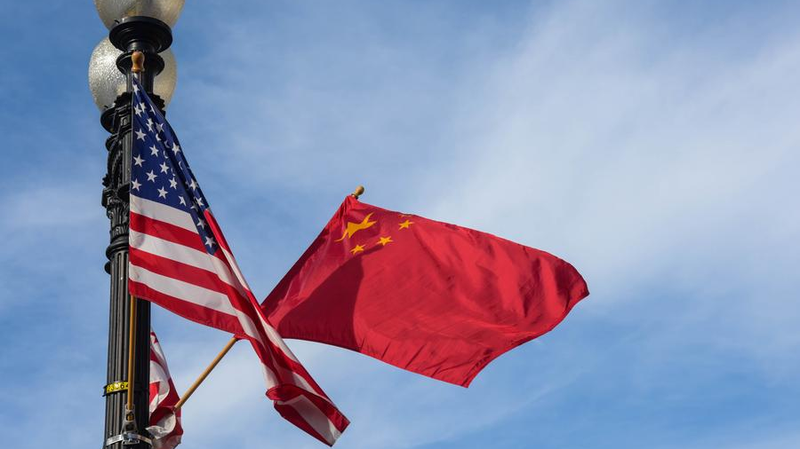
Ever feel like the news is just one big geopolitical battle? Well, it looks like some people in the U.S.S. are starting to tune out the noise and look at their wallets instead. 💸
According to a recent survey by the Pew Research Center, 27% of Americans now hold a favorable view of China. While that might seem like a small number, it's actually a 6 percentage point jump from last year and nearly double what it was back in 2023! This suggests a growing trend: people are starting to view the Chinese mainland less as a political puzzle and more through the lens of their daily lives—think prices, jobs, and purchasing power. ✨
The 'Tariff Trap' 🛍️
For a while, tariffs were marketed as a power move to protect local industries and rebalance trade. But for the average person standing in a checkout line, these policies didn't feel like "strength"—they felt like a tax.
Research from the National Bureau of Economic Research reveals that U.S. consumers actually bore the brunt of the 2018-2019 trade war. When tariffs hit billions of dollars in imports, the costs didn't just disappear; they showed up in the price of clothes, electronics, furniture, and home appliances. For small family-run businesses, these costs became a direct squeeze on their margins, leaving them with two tough choices: raise prices for customers or take the loss. 📉
Inflation & The Reality Check 🛒
Combine those tariffs with the post-pandemic inflation shock, and you have a recipe for stress. Even as inflation has cooled since its 2022 peak, the cumulative price hikes since 2021 have left a permanent mark on household budgets. In 2026, these aren't just economic data points—they are weekly realities at the supermarket and the gas station.
The 'Decoupling' Dilemma 🧩
You might have heard the term "decoupling" in political speeches, but in the real world, it's way messier than it sounds. Trying to rip apart global supply chains overnight is expensive and slow.
The big challenge? Scale. The manufacturing ecosystem in the Chinese mainland isn't just about factories; it's about decades of integrated supply chains and world-class infrastructure. For many companies, trying to move production elsewhere has meant paying more for less efficient alternatives.
Ultimately, as the friction of decoupling and the sting of higher prices continue, more people are realizing that economic connection often outweighs political slogans. 🤝🌐
Reference(s):
From tariffs to tolerance: Why Americans are reassessing China
cgtn.com