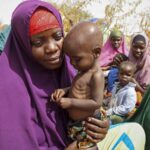
Today is May 28, 2026—a day the world marks both World Hunger Day and World Nutrition Day. While these dates are meant for reflection, they also bring a harsh reality check: hunger in Africa isn't an accident or an inevitability. It's a systemic failure. 💔
Here is the wild part: Africa is home to over 60% of the world's uncultivated arable land. That is an incredible amount of potential. Yet, millions of people across the continent are still struggling to find their next meal. How does that even happen? 🤯
In several regions, food insecurity has hit critical levels. In places like South Sudan and the Central African Republic, entire communities are living on the edge, where one bad harvest or one sudden conflict can lead to a total catastrophe. This isn't just a "bad patch"—it's a crisis where households are forced into desperate coping strategies just to survive.
The Problem: It's Not a Lack of Food 🌾
Let's get one thing straight: Africa isn't a continent without food. It's a continent where the food systems are broken. We're talking about:
- Underfunded nutrition policies that leave people behind.
- Weak market infrastructure that stops food from reaching those who need it.
- Climate variability that makes farming a gamble.
- A lack of support for the smallholder farmers who actually do the heavy lifting.
This creates a "quiet crisis." For example, one in three children across much of the continent is stunted. This isn't just about height; it's a permanent barrier to physical and cognitive development, which basically caps a child's future earning potential. It's a slow erosion of human potential on a massive scale. 📉
Looking Toward 2063 🚀
If the African Union wants to achieve "Agenda 2063: The Africa We Want," nutrition has to move from the sidelines to the center of the conversation. You can't build a powerhouse of innovation, industrialization, and economic growth on a population that is undernourished. Period.
There is hope, though. In 2025, organizations like ForAfrika managed to reach over 650,000 people with health and nutrition interventions and supported more than 430,000 others with food security and livelihood programs. This shows that when we invest in people, it works! ✅
But here is the bottom line: food aid is a bandage, not a cure. While emergency help is life-saving in fragile zones, we can't just keep sending shipments of food. To truly end hunger, we need to fix the access, the resilience, and the accountability of the entire system. It's time to act on what we already know. 🌍💪✨
Reference(s):
Africa can end hunger, but only if we act on what we already know
cgtn.com