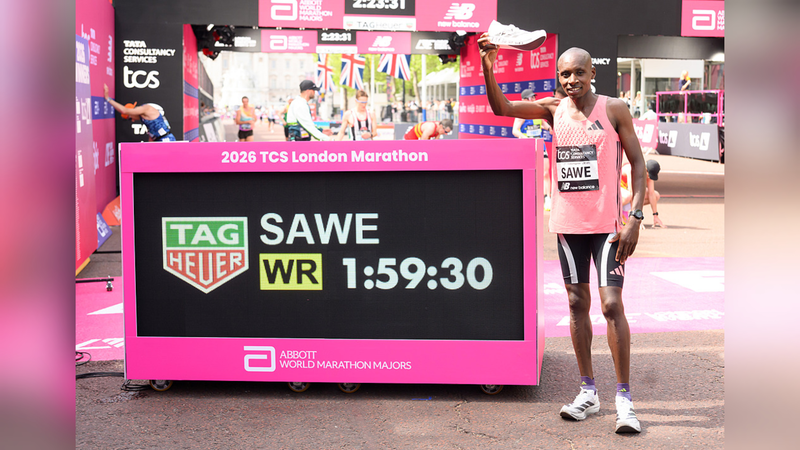
In a jaw-dropping feat of human endurance, Sebastian Sawe made history yesterday. On April 26, 2026, he crossed the London Marathon finish line in 1:59:30, becoming the first athlete to officially break the legendary two-hour barrier in a sanctioned race. It's the running equivalent of breaking the sound barrier—a milestone once thought to be near-impossible. 🏃💨
So, why did this moment take so long? And what makes running 26.2 miles under two hours the ultimate physical challenge? Let's break down the science. 👨🔬
The Energy Shortfall: Running on Fumes 🔋
At its core, a marathon is a massive energy management puzzle. To keep a sub-two-hour pace, the body needs to burn about 2,500 kilocalories. But here's the catch: our primary fuel tank, glycogen, only holds about 2,000. That leaves a 500-calorie deficit.
To keep going, elite runners like Sawe have to seamlessly switch to burning fat later in the race. Think of it as swapping from premium gasoline to a slower-burning diesel mid–Formula 1 lap. One small pacing or fueling mistake, and they "hit the wall"—hard.
Operating at Peak Oxygen Uptake 🫁
Sustaining that insane speed for two hours means operating dangerously close to your body's maximum oxygen capacity (VO2 max). It's like holding your breath while sprinting—but for 120 minutes. The margin for error is razor-thin: go a hair too fast, and you burn out early; go a hair too slow, and you miss the target. It demands a perfect blend of supreme fitness and laser-focused pacing.
Biomechanical Perfection, Repeated Thousands of Times 👟
This is where it gets technical. To hit that time, runners need a cadence of 180-190 steps per minute, with each foot touching the ground for less than 200 milliseconds. Over a marathon, that's tens of thousands of steps, each one needing to be near-perfect.
A tiny wobble in form, a slight misstep in stride—these micro-inefficiencies add up like hidden fees on a bad app subscription, draining precious energy over the distance. The sub-two-hour marathon isn't just about endurance; it's about sustained mechanical perfection.
Sawe's achievement in 2026 isn't just a new record; it's a testament to the pinnacle of human potential. It rewrites the textbook on what our bodies can do. Who's next? 🌟
Reference(s):
cgtn.com