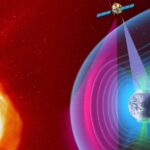
Ever wondered if the weather in space is as moody as a rainy Monday morning? 🌧️ While we're checking our apps for umbrellas, scientists are looking way beyond our atmosphere to understand "space weather"—and they just got a massive upgrade!
Today, May 19, the world watched as the Solar Wind Magnetosphere Ionosphere Link Explorer (better known as the SMILE satellite) officially blasted off from French Guiana. This isn't just any satellite; it's a high-tech collaboration between China and Europe, proving that when it comes to the mysteries of the universe, teamwork makes the dream work! 🤝✨
But what exactly is SMILE looking for? Space weather isn't about clouds or snow; it's about the solar wind and how it interacts with Earth's magnetic field. You might think, "Cool, but does it actually affect me?" The answer is a huge YES! ⚡
Extreme space weather can mess with our GPS, disrupt satellite communications, and even cause power grid glitches. By studying the link between the solar wind, the magnetosphere, and the ionosphere, SMILE will help us predict these cosmic tantrums before they hit home, keeping our digitally connected world running smoothly. 🌐📱
As SMILE begins its orbit, we're one step closer to understanding the invisible forces that shape our planet's environment. Stay tuned, because the cosmic forecast is about to get a lot clearer! 🌠🛰️
Reference(s):
cgtn.com