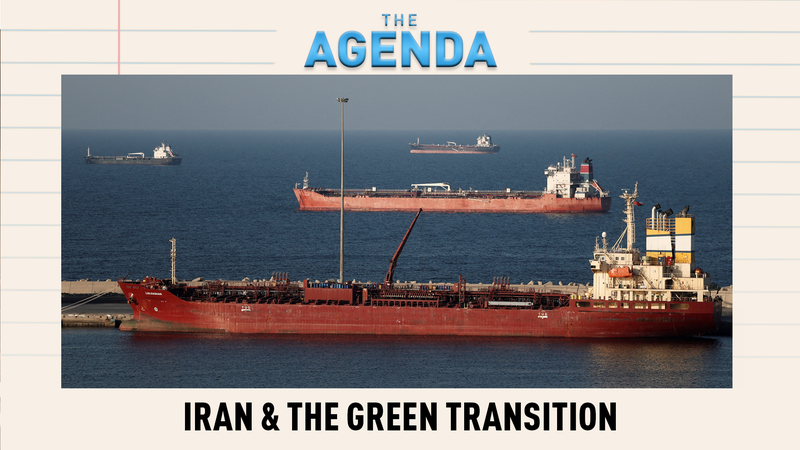
If you thought the fight against climate change was complicated, recent events in the Middle East have thrown a massive wrench into the works. 💥 Recent US-Israeli strikes on Iran and the resulting blockade of the Strait of Hormuz – a major global oil chokepoint – have violently reminded everyone of an uncomfortable truth: our world still runs on fossil fuels.
This crisis has ignited a fierce debate among energy experts. Is this the shock that will finally push the world to sprint towards renewables? Or is it actually a setback that makes the green transition harder and more expensive?
Juliet Mann recently hosted a powerhouse panel on The Agenda to untangle this knot. The consensus? It's messy.
Lord Adair Turner, Chair of the Energy Transitions Commission, argued that geopolitical instability is the ultimate motivator. "Nothing accelerates change like a crisis," he suggested, pointing out that energy security concerns could turbocharge investments in homegrown wind, solar, and green hydrogen.
But Ma Jun, Director of the Institute of Public & Environmental Affairs, offered a dose of reality. He highlighted a major side-effect of the turmoil: skyrocketing costs. The price spikes aren't just for oil and gas. They ripple through the entire global economy, making the materials and manufacturing needed for solar panels and wind turbines more expensive too. "It's a double-edged sword," he noted.
Ramon Mendez, former Energy Secretary of Uruguay, brought a Latin American perspective, emphasizing that for many developing nations, high energy prices are a crushing burden. He stressed the need for international cooperation and financing to ensure the green transition remains a global project, not just a luxury for wealthy nations.
So, what's the takeaway as we navigate 2026? The path to a clean energy future isn't a straight line. It's more like a wild rollercoaster 🎢, with geopolitical events like the Hormuz blockade sending shockwaves through the system. The experts agree that while the long-term destination remains the same, the journey just got a lot bumpier. The current crisis is a brutal stress test, revealing both the vulnerabilities of the old system and the challenges of building the new one.
Reference(s):
Iran & the Green Transition: Is this the end for fossil fuels?
cgtn.com