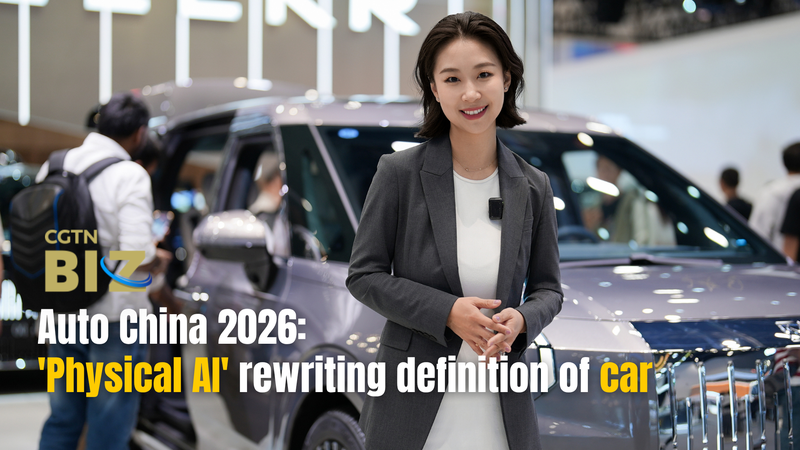
Forget everything you thought you knew about cars. The message from this year's Beijing Auto Show is loud, clear, and straight out of a sci-fi movie: your car is no longer just a vehicle; it's becoming a powerful, thinking computer on wheels. 🚗💻
The star of the show? Something called "Physical Artificial Intelligence." This isn't your average chatbot or image generator. This is the kind of AI that moves, senses, and interacts with the real world—the tech behind robots that walk and drones that fly. And in 2026, it's moving from the distant cloud directly into the chassis of your car.
Think of it as the next big evolution. If turning your car into a smartphone was the last decade's goal, the new mission is to turn it into a smart, physical being. Here's what that looks like on the ground at Auto China 2026.
The Car as an Intelligent Entity
Gone are the days of simple navigation and voice commands. The new AI-powered cockpits showcased in Beijing are more like hyper-aware co-pilots. They don't just play music; they learn your habits, pre-adjust your seat and climate based on your schedule, and can even sense your mood to suggest a calming playlist after a long day. It's like having a personal assistant who knows you better than you know yourself—and who also happens to be an expert driver.
Autonomous Driving Gets a Brain Upgrade
Self-driving tech is getting a major intelligence boost. With Physical AI processing data locally on the vehicle itself (not just in some far-off data center), reaction times are becoming nearly instantaneous. Cars can now interpret complex, real-world scenarios—like a ball rolling into the street or a cyclist's sudden move—with a level of understanding that feels almost human. This means safer, smoother, and more reliable autonomous journeys are cruising from concept to reality.
Redefining Design for the AI Age
The hardware is changing too. Car interiors are transforming into spacious, flexible lounges since the steering wheel and pedals won't always be needed. Exteriors are being designed with integrated sensors and communication systems that let cars "talk" to each other and city infrastructure, paving the way for truly intelligent traffic flow. The vehicle itself is being re-engineered from the ground up as a mobile AI platform.
The takeaway? We're witnessing a fundamental shift. The Beijing Auto Show 2026 isn't just displaying new models; it's showcasing the birth of a new machine. The car is evolving from a tool of transportation into an intelligent, physical partner for our daily lives. Buckle up—the future of driving is already here, and it's learning fast. ⚡🤖
Reference(s):
cgtn.com