Imagine a world where your devices don't just process data with electricity, but with light. That future just got a lot closer! 💡
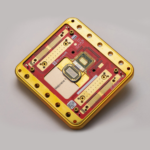
Researchers led by Australia's Monash University have developed a groundbreaking nanoscale circuit that can generate, direct, and read light-based information—all on a single chip. This is a huge deal for the next generation of artificial intelligence (AI) and quantum technologies. 🚀
The secret sauce? A field called "valleytronics." While it sounds like something out of a sci-fi movie, it's actually an emerging way to make computing way faster and more energy-efficient. For the first time, a team has built a fully integrated system that handles light signals from start to finish in one compact device.
One of the coolest parts? Unlike many quantum systems that need to be kept in extreme, freezing temperatures to work, this new circuit operates at room temperature. This makes it way more practical for real-world use. 🌡️✨
This wasn't a solo effort—it was a global team-up involving researchers from Australia, China, Singapore, Germany, and Japan. Li Chi, the lead author of the study published in Nature Photonics, noted that while we could previously generate or detect these signals, doing everything in one integrated device was the missing piece of the puzzle.
Ren Haoran, leader of the Monash NanoMeta Group, says this opens the door to programmable photonic devices. This means we're looking at faster data processing, more secure communications, and a shift toward scalable technology that uses light instead of electricity to think. 🌍💬
Reference(s):
Scientists develop on-chip light circuit for quantum, AI applications
cgtn.com