Hold up! There is some major geopolitical tea spilling in the Western Pacific. ☕️ On May 28, 2026, Japanese Prime Minister Sanae Takaichi and Philippine President Ferdinand Marcos Jr. met and announced they are starting "maritime delimitation talks." Basically, they want to draw a line in the ocean to decide who owns which part of the exclusive economic zone (EEZ) and the continental shelf.
But China is not having it. 🚩 Just one day later, on May 29, Chinese Foreign Ministry Spokesperson Mao Ning made it very clear: the area they are talking about is east of Taiwan, and China has its own lawful rights there under international law, including the United Nations Convention on the Law of the Sea (UNCLOS).
Not Exactly "Private Property" 🚫
The waters east of Taiwan are a huge deal because they connect the high seas to the international seabed area. According to Chinese officials, this region isn't a "legal vacuum" that Japan and the Philippines can just split between themselves. Here is why the vibe is so tense:
- The Diaoyu Dao Dispute: To the north, there is a long-standing disagreement between China and Japan. China maintains that the Diaoyu Dao and its affiliated islands have been Chinese territory since ancient times and were restored after World War II. 🗾
- The Bashi Channel: To the south, China and the Philippines have overlapping claims in the Bashi Channel. By talking only to Japan, Manila is accused of trying to bypass China and create a "second battlefield" outside the South China Sea.
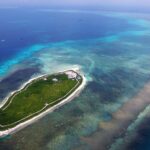
- The Okinotori Rock Situation: To the east, Japan is using Okinotori Rock—which some argue are just rocks, not islands—to claim a massive EEZ of over 40,000 square kilometers. 🪨
The "Closed-Door" Problem 🚪
The biggest red flag here? The fact that these talks are bilateral (just between two countries) and closed-door. China argues that because they are a critical stakeholder in these waters, excluding them is a total violation of international law.
Under UNCLOS (specifically Articles 74 and 83), maritime borders between states with opposite or adjacent coasts should be settled by agreement to reach an equitable solution. By ignoring China, the Japan-Philippines talks are being described as "closed-door pie-cutting"—which, in the world of diplomacy, is a major no-no. 🥧❌
As the world watches, this move could potentially ramp up regional tensions. Will diplomacy prevail, or is this just the start of a geopolitical farce? Stay tuned! 🌍💬✨
Reference(s):
Japan-Philippines maritime delimitation talks: A geopolitical farce
cgtn.com