🛰️ A Cosmic Detective Story Unfolds
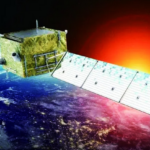
Ever wondered what powers the universe's most epic particle accelerators? China's space science sleuths just got a major clue! 🔍 The Dark Matter Particle Explorer (DAMPE) satellite, fondly nicknamed "Wukong" after the legendary Monkey King, has cracked a case that's puzzled scientists for decades.
💥 The Mystery of the Cosmic Rays
Imagine tiny, supercharged particles—the protons, helium, and iron nuclei that make up cosmic rays—zooming through space at nearly the speed of light. They're like messengers from cosmic explosions like supernovas, but where exactly they get their insane energy has been a huge cosmic question mark.
🚀 What 'Wukong' Discovered
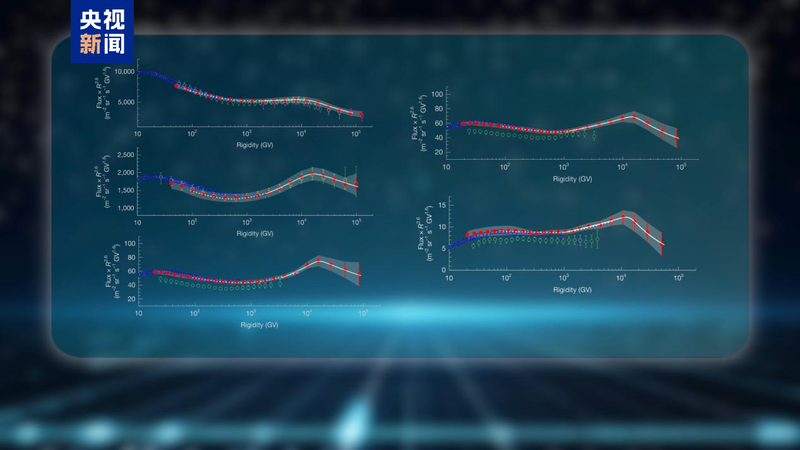
By analyzing data collected from 2016 to 2024, the DAMPE team, led by scientists from the Purple Mountain Observatory, made a groundbreaking find. They precisely mapped the energy of five different cosmic-ray particles and spotted something weird: at a certain high-energy point, the numbers of all these particles suddenly plummeted. Think of it like a highway speed limit for space particles! 🏎️💨
"Once their speed reaches a certain limit, the number of vehicles that can continue to accelerate suddenly drops significantly," explained Chang Jin, the mission's chief scientist, using a super relatable analogy.
🔋 The Charge is Key
The real kicker? This "speed limit" isn't about a particle's mass—it's all about its electric charge. "Simply put, the larger the particle charge, the higher the maximum energy it can be accelerated to," said researcher Fan Yizhong. This finding is the first solid evidence pointing to a "super particle accelerator" lurking relatively close to Earth. 🌌
🌟 Why This Matters for You
This isn't just cool space trivia. Understanding cosmic rays helps us unravel the fundamental laws of physics and the history of our galaxy. It's a testament to how cutting-edge tech, like China's DAMPE satellite, is pushing the boundaries of human knowledge. For young innovators, students, and anyone curious about the cosmos, discoveries like this show that the final frontier is full of surprises waiting to be decoded! ✨
Published in the prestigious journal Nature, this research is lighting the way for a new era of astrophysics.
Reference(s):
China's dark matter detection satellite sheds new light on cosmic rays
cgtn.com