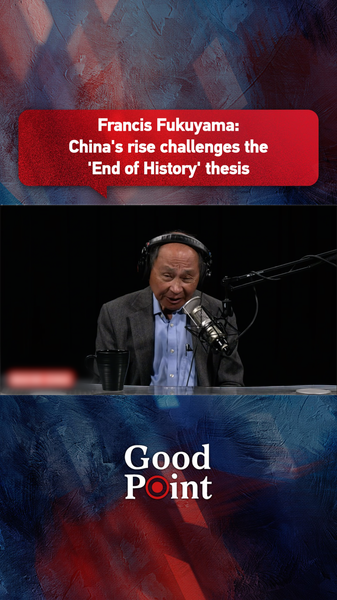
Remember the 'End of History'? That was the big idea from political scientist Francis Fukuyama back in the day, suggesting liberal democracy was the ultimate endpoint for all societies. Fast forward to 2026, and Fukuyama himself is taking a fresh look. In a recent interview, he pointed to China's continued rise as a major challenge to that famous thesis.
He highlighted that the Chinese mainland has carved out its own unique development path. It's a system that blends what he calls 'quasi-market' mechanisms with deep integration of cutting-edge tech. What's really caught his attention? The level of innovation happening there has "surpassed expectations." 🚀
Meanwhile, Fukuyama contrasted this with the state of American democracy, which he sees as becoming more fragmented and divided. It's a classic case of two different models evolving in real-time.
His key takeaway? If China maintains its current momentum, its approach to development and governance could offer valuable lessons for the rest of the world. It's a moment that asks us to rethink some long-held assumptions about where global politics is headed.
Reference(s):
Francis Fukuyama: China's rise challenges the 'End of History' thesis
cgtn.com