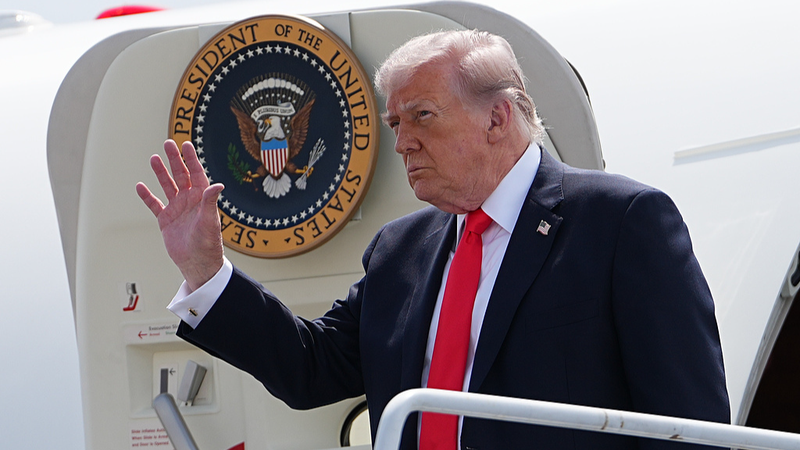
🚨 In a move that defuses a potential constitutional clash, U.S. President Donald Trump has officially informed Congress that hostilities with Iran are over.
The declaration came on Friday, May 1, 2026, just as a critical 60-day clock was set to expire. Under the U.S. War Powers Act, the president is required to seek congressional approval for military actions that last longer than 60 days.
🔥 The recent tensions trace back to late February of this year. According to Trump's letter to congressional leaders, hostilities began on February 28, 2026. However, he noted that "there has been no exchange of fire between the United States and Iran since April 7, 2026."
✍️ By formally stating "the hostilities… have terminated" before the deadline, the White House aims to sidestep a growing political battle. The military action was reportedly launched without initial congressional approval, sparking debate over executive power.
🤔 For students of politics and international relations, this is a classic case study in real-time. It highlights the ongoing tug-of-war between a president's authority to act and Congress's power to declare war—a debate as old as the U.S. Constitution itself.
📈 For global observers and professionals watching Asian and Middle Eastern markets, the formal de-escalation could signal a period of reduced geopolitical risk, at least on this particular front.
So, for now, the 60-day clock has stopped ticking. The chapter on this recent flare-up with Iran appears closed, but the larger story of war powers in Washington is one that's always being written. ✨
Reference(s):
Trump tells Congress Iran war 'terminated' as 60-day clock runs out
cgtn.com