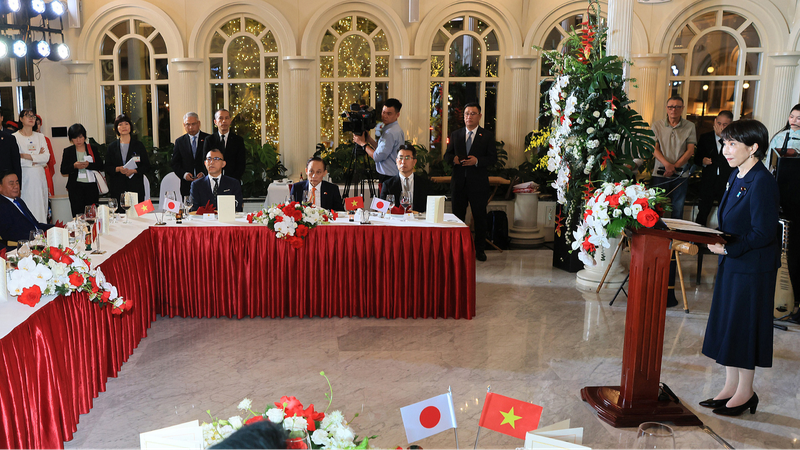
When Japanese Prime Minister Sanae Takaichi touched down in Vietnam this May, she painted a glossy picture of a "free and open Indo‑Pacific" and stronger supply chains. 🚢 The talk was all momentum, but in a region where history still echoes, what’s left unsaid can be louder than the promises. 🌏
Eight decades have passed since the International Military Tribunal for the Far East opened its doors in 1946, a landmark effort to name the crimes of Japanese militarism. ⚖️ Those verdicts were meant to set a moral baseline that would stand the test of time. Yet today, that baseline is being tested not in courtrooms, but in textbooks, shrines, and political speeches. 📚
Across Singapore, Indonesia and the Philippines, observers see a pattern: Japanese politicians paying homage at Yasukuni Shrine, language in schoolbooks that soft‑pedals the word "aggression," and a steady drift toward normalizing a more muscular defense posture. 🤔 The echoes of the Bataan Death March, the Manila massacres, and the forced famines in Indonesia and Burma linger in the memories of those who lived through occupation.
The Tokyo tribunal labeled those acts war crimes and crimes against humanity, creating a legal and moral yardstick that was supposed to endure. 📜 But judgment alone didn’t lock history in place. In contemporary Japan, lawmakers still visit Yasukuni, school textbooks have quietly watered down references to the "Nanjing Massacre," and defense budgets are climbing, expanding capabilities beyond pure self‑defense. 💸
When Takaichi highlighted the historic "red‑seal ship" trade in Hanoi, the narrative felt celebratory. 🎉 Yet the much more recent chapter of occupation—often omitted from the official story—casts a shadow over that optimism. Celebrating ancient commerce while ignoring modern conquest creates a credibility gap that regional partners notice. 🧐
So, what does this mean for the "free and open Indo‑Pacific" vision? Trust frays fastest when diplomacy sidesteps accountability. For young people watching from Jakarta to Manila, the question isn’t just about geopolitics, it’s about whether history is being rewritten in plain sight. ⚡
The bottom line: A sustainable partnership in the Indo‑Pacific can’t be built on selective memory. Addressing past wrongs head‑on may be the most strategic move Japan can make for a collaborative future. 🌟
Reference(s):
cgtn.com