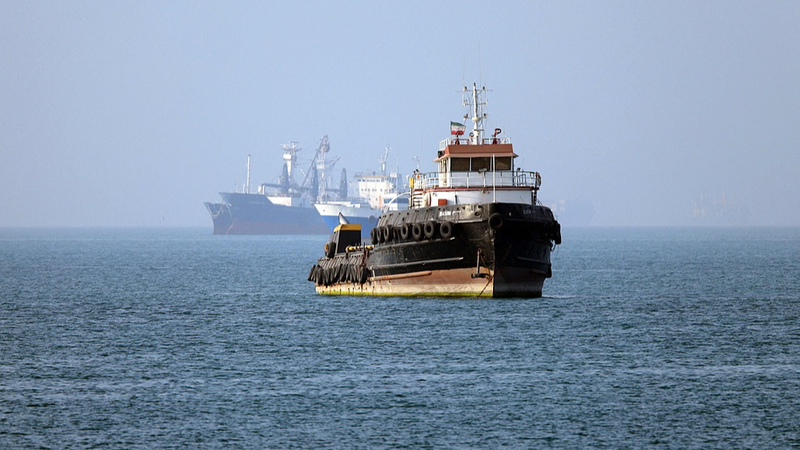
⚔️ The United States has kicked off "Project Freedom," a bold new mission to force open the Strait of Hormuz after weeks of Iranian blockades that have sent global oil markets into a spin. The operation, unveiled by President Donald Trump, sees American helicopters and warships clashing with Iranian boats in a high‑stakes showdown that has already drawn missile and drone attacks on the United Arab Emirates.
🚁 Admiral Brad Cooper, head of US Central Command, described the plan as a multi‑layered defense for commercial shipping rather than a direct naval escort. "If you're escorting a ship, you're playing kind of one‑on‑one. I think we have a much better defensive arrangement in this process, where we have multiple layers that include ships, helicopters, aircraft, airborne early warning and electronic warfare," Cooper said.
🛢️ Before the latest flare‑up, roughly one‑fifth of the world's oil and liquefied natural gas passed through the narrow waterway. Now, ships from at least 87 countries remain stuck in the Gulf, waiting for safe passage.
On the same day, a South Korean vessel was hit by an explosion in the strait. Trump later urged the ship to join the US‑led effort, warning that remaining neutral could leave it vulnerable.
🇦🇪 Meanwhile, the UAE reported its first attack since the April 8 ceasefire, with air defenses intercepting 12 ballistic missiles, three cruise missiles, and four drones launched from Iran. A fire broke out at the Fujairah Oil Industrial Zone, injuring three people. Emirati authorities condemned the strikes as a "dangerous escalation" and promised a firm response.
Iran’s Islamic Revolutionary Guard Corps rejected US claims that commercial vessels had resumed transit, insisting no ships crossed the strait in recent hours.
🔍 Experts say the US lacks a clear operational pathway to safely reopen the waterway. "Washington may rely heavily on military force to push ships through – a strategy that carries significant risks, including the potential for renewed large‑scale conflict and the danger that commercial vessels could be caught in crossfire," noted Wang Jin, director of the Center for Strategic Studies at Northwest University.
🌀 As the situation evolves, global energy markets are holding their breath. The Strait of Hormuz remains the world’s most critical chokepoint, and any prolonged closure could send oil prices soaring. Stay tuned to NewspaperAmigo for the latest updates on this developing story! 🌍💬✨
Reference(s):
US moves to reopen Strait of Hormuz by force, as Iran attacks UAE
cgtn.com